Author: OnceUSave

  • Plan Like A Cockroach

    Plan Like A Cockroach

    Cockroaches are the ultimate survivors1. They can live without air for an hour, without food and water for months. They can survive the Arctic cold. Ice ages and continent shifts mean nothing to them. It is no surprise then that the cockroach as a species has been around for 300 million years and it is not going anywhere soon.

    Your plan should have the same survivalist foundations as that of a cockroach. No matter what the world throws at it, your plan must survive.

    So never set yourself up for a disaster like this…
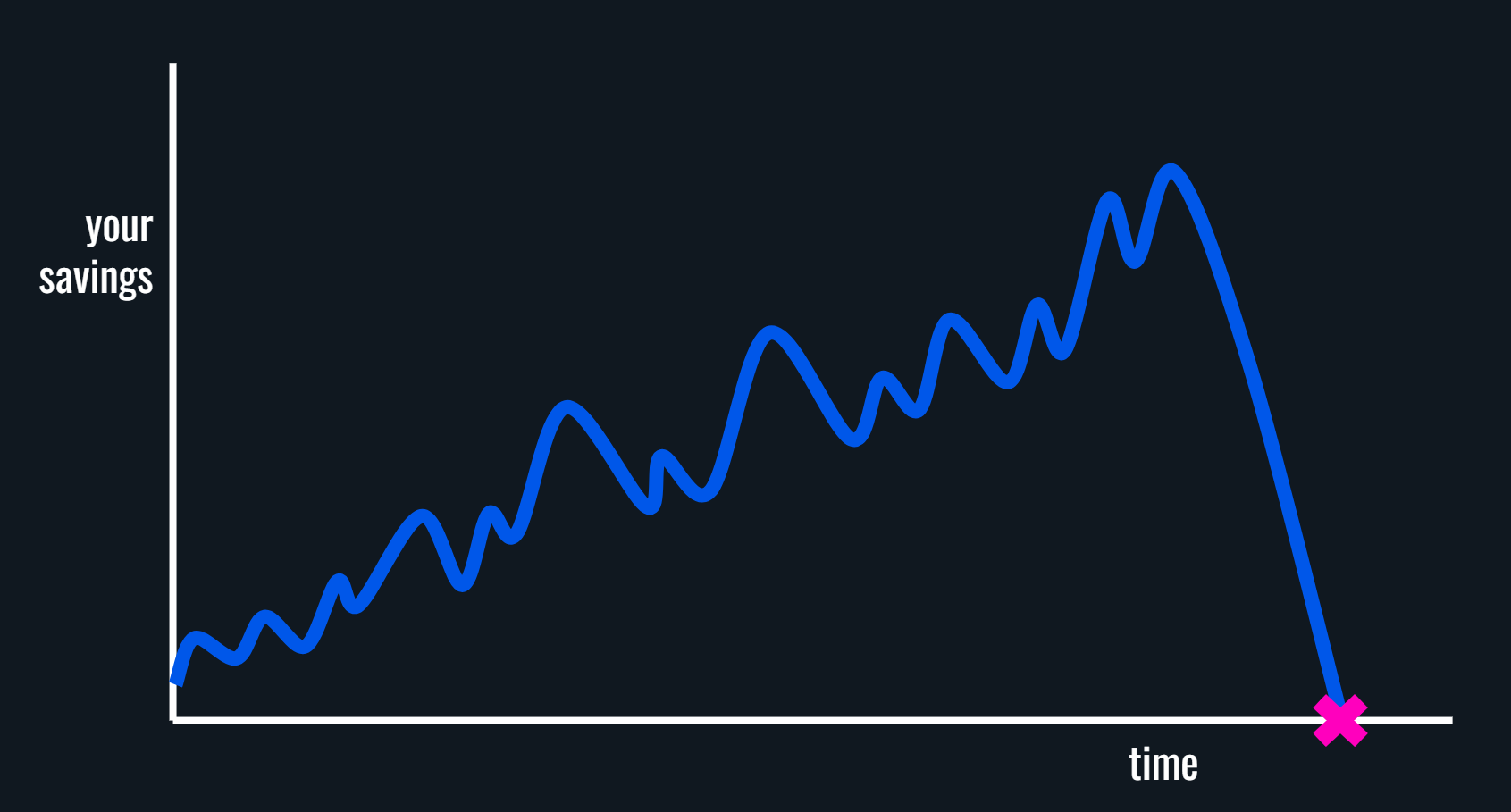
    And disasters like these happen all the time. Leverage, which is when you borrow money to invest, is oftentimes to blame.

    Tying up a big chunk of your net worth in one or two stocks is another very common cause. That is taking on unsystematic risk at its core and the outcomes could be life-altering…

    Former Enron Corp. employee George Maddox, who lost his retirement savings when the energy giant collapsed, says he has been forced to spend his golden years making ends meet by mowing pastures and living in a run-down East Texas farmhouse. Maddox, who served 30 years as a plant manager with the company, was long retired as Enron began spiraling out of control in the months leading up to its bankruptcy on Dec. 2, 2001. With all his retirement savings tied up in 14,000 shares of company stock, then worth more than $1.3 million, Maddox says he never saw the crash coming.

    10 YEARS LATER: What Happened To The Former Employees Of Enron? Business Insider, December 1, 2011

    I know of someone who went from $4 million in their employer stock to zero in six months. If you have seen some of the headlines around recent bank failures, you’ll know which one did it. That is literally all the money they had so life-altering is the least bad way I can describe it.

    Unsystematic risk, in plain English, means you cannot predict the good (or the bad) about a stock for long into the future. You can do that with a basket of stocks (businesses) but with one or two stocks, in this day and age of hyper-rapid disruptions, it is a near impossibility.

    And most of the concentrated stock risk unknowingly creeps up on you if you get paid in employer stock. You must then diversify out of it because for every story that pans out, there are multitudes more that fizzle away.

    And when your employer’s story fizzles away, you lose the money that you invested in that stock, you lose your paycheck, your health insurance and the rest.

    And regardless of how much you believe in the business you work for, it won’t be around forever. Things change, key employees leave, and competition is always waiting at the heels to eat into whatever moat your business currently enjoys.

    And drawdowns (declines) are deeper with concentrated portfolios with no guarantee of a recovery. That reversion to the mean (more on this later) that is ingrained in the design of most broad-based portfolios could never happen to you.

    Talk about drawdowns, you know that had you invested in Apple stock 20 years ago, you’d now be rich. But go back another 20 years and say you bought $10,000 worth of Apple stock in April of 1983, guess how much money you’d have 20 years later?

    $8,400.

    Are you telling the world that you would have the fortitude to hold on to a “loser” for 20 long years while the rest of the world gets rich? Not a chance.

    Plus imagine the lifelong guilt and literal trauma you’d be living with had you waited for 20 long years only to eventually bail on that “loser” and then watch it soar to become the most valuable business in the world.

    So do individual stocks ultra-sparingly and if you do decide to do it, do it with a tiny portion (under 5%) of your money with the intent of holding forever. If those stocks go nowhere, no big deal. You still have the bulk of your savings intact to take you to your goals.

    And when I say do individual stocks, do it with stocks that can matter. Because you are looking for that lottery-type outcome to get compensated for taking on lottery-type risk.

    So, you can’t be holding a trillion-dollar stock because for that stock to double, it needs to become a 2-trillion-dollar stock. How many 2-trillion-dollar stocks do you see around?

    Plus, you likely own that trillion-dollar stock by the boatload anyway if you own a half-decent portfolio so if it were me, I’d own small, obscure stocks that have a shot, regardless of how faint, to do 10 times your money in 10 years.

    Reversion to the mean…

    I passingly mentioned reversion to the mean but I feel it needs more explaining. Reversion to the mean assumes that the value of an investment, even if it were to decline, will eventually revert to its long-term trajectory of perpetual growth.
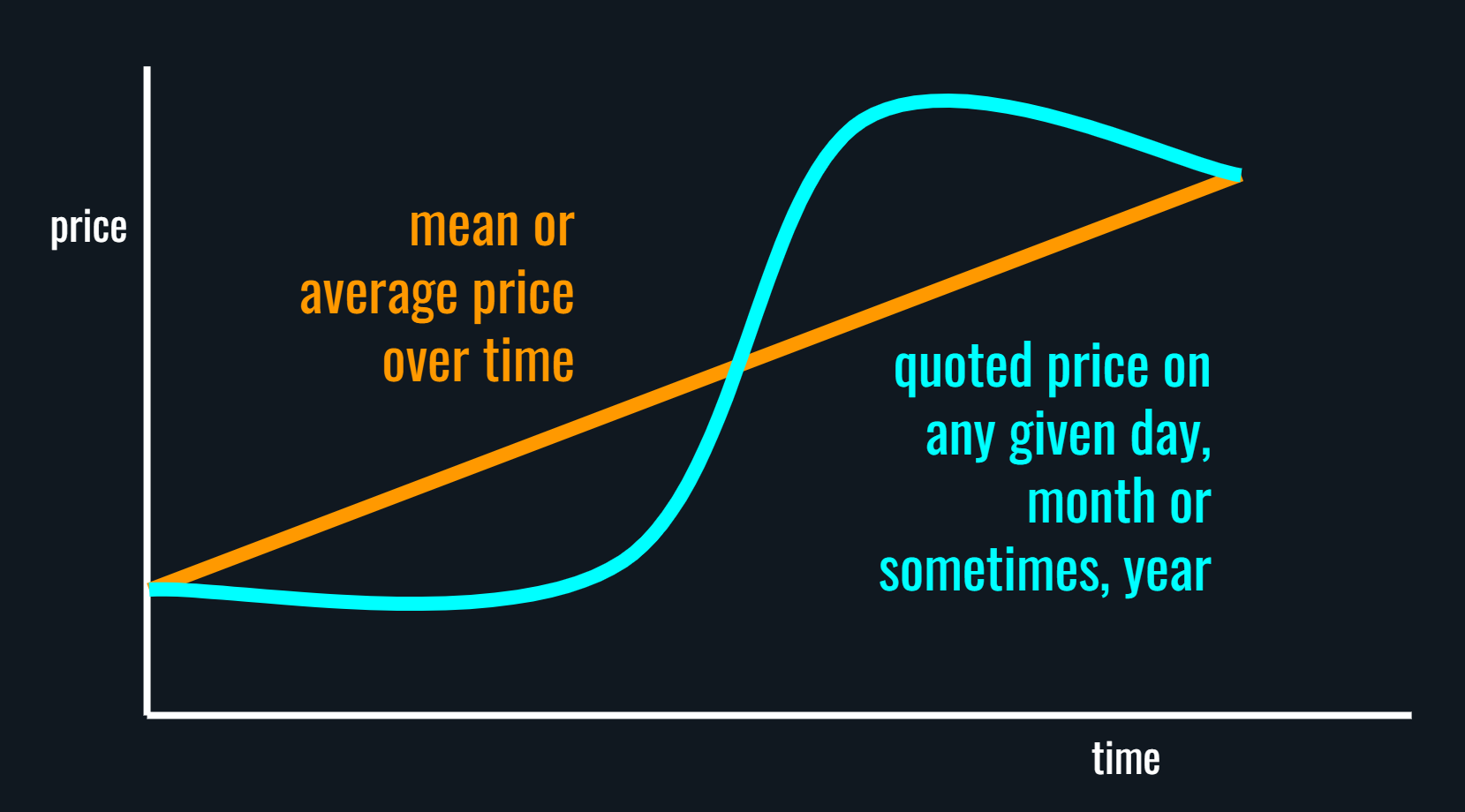
    You cannot assume that with individual stocks because stocks go down all the time, never to recover.

    But with a diversified basket of stocks that are at the top of our ever-evolving economic value chain, with that basket getting refreshed with new businesses as the economy changes, sort of like auto self-cleansing, the price of that basket can go down, but it will eventually recover. It must recover unless we are talking the end of the world kind of scenario.

    This reversion to the mean backdrop is what then allows you to confidently dollar cost average into your plan, knowing full well that in the long run, the collective prices of the investments you own will recover. They must recover.

    Thank you for your time.

    Cover image credit – Erik Karits, Pexels

    Loren Grush. “The Verge review of animals: the cockroach“, The Verge. January 17, 2016.

  • Sidestepping Bubble Stocks

    Sidestepping Bubble Stocks

    Buying businesses (stocks) is not about winning popularity contests. In fact, the more popular a stock or a category of stocks gets, the less likely its price matches its value. Pay too rich a price for a popular stock du jour and you could be sitting on that stock forever, never to be made whole.

    A great business, hence, does not a great stock make. Take Cisco Systems for example. Cisco Systems, as we know, supplies infrastructure that powers the internet economy. They are of course not the only ones. They have competition but by far they are the biggest of them all.

    And you don’t just wake up one day and decide to compete with Cisco Systems. You need engineering. You need services. And above all, customers need to trust you to provide them with reliable products that won’t bring down their networks. If you want all of that, Cisco Systems is your place to go. It is as predictably profitable and as moat-infused a business as any business can get.

    At the peak of the Dot-com boom in the year 2000, Cisco stock was selling at triple-digit multiple of profits with its total market capitalization eclipsing $600 billion. Market capitalization is the price quoted for a business on the stock exchange on any given day so if you wanted to buy Cisco Systems as a business in its entirety, you would have needed six-hundred billion dollars.

    That was the quoted price but was that the right price? In hindsight, clearly not. Cisco trades today1 at less than a third of its market price of almost a quarter century ago. Will it ever see the old highs again? Never.

    And there was never much wrong with the underlying business. It made billions in profits and still makes billions in profits. It is just that the market at the time priced the business far, far away from its true intrinsic value. The market was clearly wrong then and possibly right today, but we can only know that in hindsight because predicting profits years and decades out is a near impossible feat.

    But could you have bypassed that train wreck had you done some basic back of the envelope math? Maybe.

    I say maybe because we can do Monday-morning quarterbacking all day long but when we are in the heat of a stock market mania, who knows what we’d really do and what theories we might concoct to justify any valuation. And the heat at the peak of that mania was intense.

    So, here is how you could do a first-cut analysis on any stock you are considering buying. The first thing is to always evaluate your buying decision as if you are buying the entire business. That is regardless of how small or big of a stake you plan to buy in that business.

    Then consider your payout timeframe. I have talked about this before but say you are in the market to buy a corner gas station and it costs a million dollars.

    Now if you invest a million dollars, you want that gas station to get you back your million as soon as possible.

    So, say it takes ten years for that gas station to generate enough profits that equals your initial investment. That is your payout timeframe.

    Once your initial investment comes back to you in the form of profits, only then do you really start making a net return on your investment. This math of course ignores opportunity cost and the hassles of running a business so if you were to factor that in, you would need that payout timeframe to be a lot quicker but let us ignore that to keep the math simple.

    So back to buying Cisco at the then quoted price of $600 billion and if you were looking for a ten-year payout, you were expecting that business to return $60 billion a year in profit for ten straight years. Only then, you’d start making a return on your original investment.

    Cisco’s profits in the year 2000 were about $3 billion, a far cry from the multiple tens of billions of dollars you should have expected in theory. And $60 billion a year in profit was and is a gigantic number for any business to sustainably deliver for that long a timeframe.

    So of course, it was an insane valuation from a payout perspective and that is the only perspective that eventually counts.

    That was the Dot-com bubble, and you’d think we would have learnt our lessons but here we are. In fact, the insanity of the last few years is at another level. I don’t recall ever a time in history with so many businesses priced at tens of billions of dollars but with a nary a sight towards making a profit.

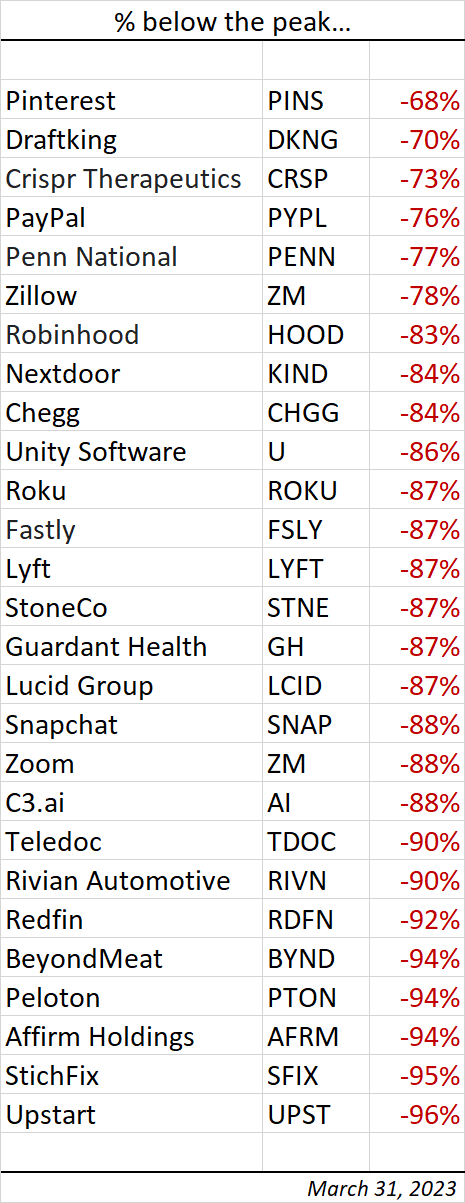
    And when the market eventually comes back to its senses, the consequences can be brutal. The list below highlights some of the names that were insanely priced and the after-effects of what happens when the market resets its expectations.

    And it is by no means a comprehensive list. 

    This is not to say that all these businesses are hurting. The businesses can continue to otherwise thrive. It is just that their stock prices ran way ahead of their true fundamental value and now prices are reverting to meet that value.

    Often though, a stock price faltering can falter a business. With a big chunk of key employee compensation especially in the growth, tech space, tied to employer stock, when the stock price falters, they leave. That in turn creates a self-destructive downward spiral towards mediocrity. And eventually, insolvency.

    Bubble stocks, once they collapse, seldom recover. So, if you are holding on to them thinking that you’d be made whole someday, you could be holding forever. That while the rest of the economy continues chugging along.

    Thank you for your time.

    Cover image credit – Mary Taylor, Pexels

    1 March 31, 2023

  • Prepackaged Portfolios Are Seldom Optimal

    Prepackaged Portfolios Are Seldom Optimal

    Cookie-cutting the investing process seldom works. Take for example someone who is a federal government employee, and we know what that entails: a rock-solid job security with access to an equally rock-solid pension plan.

    So, assuming she continues to work there till she retires, should she ever own bonds?

    And we know the deal with bonds; stable prices with near-guaranteed income but with long-term returns far lower than what we can expect from stocks.

    And why should we expect anything else? Why should we get paid more for stuffing our savings under the proverbial mattress? We should not because capital preservation and growth doesn’t exist. And it shouldn’t exist.

    Stocks will test your will from time to time, but they are what you need by the boatload if you want to retire well.

    And even with stocks, there is a range of outcomes we can expect. Small company stocks should earn us more than large company stocks because they are riskier. So should emerging market stocks over say developed market ones because again, they are riskier.

    But there are no guarantees. Because if there were any guarantees, they wouldn’t be riskier.

    So, going back to that federal employee, should she ever own bonds? Almost never.

    She does not need to own bonds because her pension is the best bond replacement. Not only that, that pension is inflation-linked so an even better deal than plain old bonds.

    At the other extreme, say instead of working for the federal government, she worked for a startup. Or say she worked in sales or on Wall Street as an investment banker.

    She is now exposed to all the vicissitudes of the economic cycle; both on the upside and on the downside.

    Her livelihood is now near-perfectly correlated to the stock market. She is more like a stock whereas her alter-image, the federal employee is more like an inflation-indexed bond. A big decline in the stock market would likely cause the Wall-Streeter to lose her job whereas the federal employee will remain unscathed.

    So now that we have the context, clearly these two sets of employees cannot own the same portfolios. They could but that would be sub-optimal.

    And that is the problem with cookie-cutter investments like the age-based portfolios that happen to be the default choice in many of our workplace retirement plans. These funds start out aggressive with an heavy allocation to stocks and steadily get conservative with a greater allocation to bonds as you near your goals.

    And they (the funds) do all this mechanistically without knowing what else is going on in your life because they cannot know about your life. All they do know is that you have this one account in which you have picked this one investment and that is all.

    Take another scenario where say you have $5 million socked away in an age-based portfolio after a lifetime of aggressive saving. And even if you needed a ‘mere’ $100,000 a year to live on, these portfolios would still move a big chunk of your savings into bonds. You’ll certainly own a less volatile portfolio but is that optimal?

    Not really because $100,000 a year off a $5 million portfolio is a 2% withdrawal rate, a rate that could easily be achieved with an all-stock portfolio.

    Plus imagine giving up on all that growth that an all-stock portfolio is likely to deliver with time. You might not need the money but your heirs or the charity you wish to bequeath your savings to would be glad you didn’t make a sub-optimal choice.

    One size does not fit all. Every situation is different and hence every allocation, every plan should be different.

    No problem sticking with these pre-packaged portfolios early in your savings journey assuming you are aware of some of their eventual flaws. But as you get up in assets with time, you’d certainly want to revisit these choices to reformulate a plan that is yours.

    Thank you for your time.

    Cover image credit – Jéshoots, Pexels

  • Retire To Something

    Retire To Something

    San Luis Obispo has one of the cutest downtowns in California. A must try there if you are ever around is a Turkish pastry shop called Lokum. So, so good.

    On a stroll to one of the many beaches there, I happened to come across a long-retired couple, likely in their seventies, voluntarily cleaning up the trash people left behind. Good on them.

    So, I started chatting with them to find out more about their life and how retirement is going for them. They said they have never been busier. They restore 100-year-old musical instruments which started out as a hobby but has now become a full-on money-making gig. Folks from all over the world reach out to them for business.

    And it is not like they retired and then they went looking for a hobby to fill their time. The husband, a mechanical engineer by training, was already tinkering with it while he was working, and he carried that into his retirement.

    That is the way to do it. I know what I just described and what I am about to expand on is a first-world problem but now that we are here, I can see our lives segmented into three distinct phases. The first phase is mostly about play and school and eventually blossoming into a functioning adult.

    Then we enter the workforce, oftentimes followed by marriage and possibly kids. This stretch by far is likely to be an intensely busy phase of our lives. We cannot ever wait to retire.

    So, we do the requisite amount of planning to make retirement a reality and we retire.

    But retire to what? There is only so much Netflix we can watch. There is only so much golf we can play. We’d eventually tire of all that we consider fun until we are in the thick of it.

    And we don’t realize it yet, but work is not just about fulfilling our financial obligations. It becomes our identity. It is the first thing we get asked when we meet someone new. It provides us with a sense of meaning. It gives us a reason to wake up and fill our time with all the good that we are about to do in this world.

    So, transitioning from a life with our calendars filled to the brim into a life of literal nothingness is not going to be fun. It is best we plan for that transition before we are already there.

    Plus, with the continual rise in life expectancies, we could be retired more number of years than we spent working. And it is not just about money because with adequate planning, most folks reading this will be able to afford a life of nothingness, but would you really want that for decades on?

    For the lucky few who have found their calling in the work they are already doing, life is great. They have no reason to look for an alternative. Granted, the workplaces of today are not as accommodative to older employees but that will change. Imagine letting all this experience and expertise go to waste.

    But if you are in the camp where you want to try something new, there is this sweet little phase that’ll likely come in your fifties where the kids are off on their own and you have some breathing room to explore. That is your figuring out time but figure something out you must.

    Because one of the surest ways to prevent and delay cognitive decline as we age is by keeping our brains active. And there is nothing better than work that gives us a shot at that.

    Again, it doesn’t have to be work, work. It could be anything but sitting in front of the TV to kill time is not it.

    Remain useful, feel youthful.

    Thank you for your time.

    Cover image credit – Greta Hoffman, Pexels

  • How Risky Are Individual Stocks?

    How Risky Are Individual Stocks?

    Google was busy relishing its unrelenting grip on the search business and along comes ChatGPT, a supposed Google-killer that helped lop several hundred billion dollars off its market value. Whether ChatGPT does any lasting damage to the core of Google’s business is to be seen but the stock market thinks there will be some damage.

    And this revaluation, which gets instantly reflected in a stock’s price, is all about changes in expected future profits. The stock market thinks that Google’s long-range profits are going to decline.

    The market is not always right but it is more right than wrong. Predicting changes in future profits is hard.

    But long-range profits are all that count. If profits do not come, a business ceases to exist.

    But even if the market is not always right, assuming that it is right will save you from the poorhouse. Because who makes up the market? The best and the brightest from around the globe. These folks live and breathe these things. They are constantly on the hunt with super-computers running in the background, to drive out any pricing inefficiencies that exist.

    So, if you got some news about a public business that you think only you know, rest assured the world knows. And it is already priced in.

    Human beings do go crazy from time to time that cause bubbles, but bubbles eventually burst. The price and the value of a business will converge and that is all that matters for long-term investors like us.

    But back to ChatGPT, guess who owns a big chunk of the underlying technology that could damage Google’s core business? Microsoft.

    Microsoft will reap some of the profits that would have flowed to Google. And if you owned shares in both Microsoft and Google, you’d get a piece of the action regardless of who wins.

    That is competitive disruption. It forms the heart of an efficient capitalist system. The more profitable a business and the lower the barriers to entry to that business, the more competition it is going to invite. Most good businesses have moats around them to defend against competition. The stronger that moat, the greater the profits a business derives and the higher its eventual stock price.

    But the moment that moat weakens, the market reprices that business and almost uniquely to the downside.

    And gone are the days where you can own a few blue-chip businesses and sleep on them. Change happens so quickly these days that one moment you have a business and the next moment it is gone. Even for businesses that you thought you could own for life.

    Take Procter & Gamble (P&G) for example. What can change with toothpaste and detergent but then P&G must meet their customers through a retailer.

    That is where Costco Wholesale comes in. They own the distribution. Without distribution, Procter & Gamble can’t sell nothing.

    And Costco knows how profitable some of P&G’s brands are.

    So, what do they do? They make a near-perfect copy of that brand and sell it under their own Kirkland Signature label at a cheap enough price point and poof go P&G’s profits.

    The underlying demand is still there. Who gets to fulfill that demand changed. That is again, capitalism at its best.

    And if you really want to know how risky individual stocks can get, let me take you back to the good ol’ days of 1999. Nasdaq was on fire. Anything Dot-com was an instant hit.

    The stock of the day was Cisco Systems. And Yahoo. And AOL. And InfoSpace. And Inktomi. And Sun Microsystems. And Lucent, Qualcomm, Juniper Networks, Global Crossing, Nortel, WorldCom, JDS Uniphase, Palm, BlackBerry and on and on. If you did not own any of these, you were a loser.

    Where are they now? Many don’t exist. Those that do, their stock prices have yet to recover 25 years later. All that while, the world stock markets continue to climb, delivering that expected equity risk premium that we rely on to meet our many life goals.

    That equity risk premium does not come for free. You’ll have to live through stomach-churning volatility from time to time. People call that risk but that’s not true risk. That is the fee you pay to participate.

    But you must own stocks. When you own stocks, you own businesses. And owning businesses is how you fight inflation. You must invite all and every opportunity to own more of those businesses.

    But single stock risk is real. Hendrik Bessembinder, a finance professor at Arizona State University’s W. P. Carey School of Business writes that out of the 26,000 businesses that went public between 1926 and 2019…

    • Only 42 percent of them created net wealth for their shareholders. The remaining 58 percent (15,000 businesses) destroyed wealth in all their existence.
    • Five firms accounted for 12 percent of all the wealth created in the stock market.
    • Eighty-three firms (0.3 percent of the total) accounted for 50 percent of all wealth created.
    • And 1,000 stocks (4 percent of the total) created all the net wealth above what Treasury bills would have paid you.

    Feel lucky yet?

    There is of course a difference between owning stocks and renting them. Owning stocks is how you get rich but only if you own them for the long run. You must give time to let capitalism work its magic.

    But you don’t own a stock here and a stock there. You own a whole bunch of them, spanning all sectors, sizes and continents.

    Thank you for your time.

    Cover image credit – Raka Miftah, Pexels

  • Demystifying Investment Returns

    Demystifying Investment Returns

    We’ll start with the simplest of all possible investments and that is buying Treasury bonds. When we buy a bond, we become a lender. And with Treasury bonds, we become a lender to the U.S. government.

    So, say the yield (interest rate) on a Treasury bond that matures in 10 years is 5 percent. For every $1,000 invested in that bond hence, the U.S. government pays you $50 each year as interest payment. And they do that for 10 straight years. That is the U.S. government compensating you for borrowing from you.

    When that bond matures (when the loan term ends in 10 years), you get your original principal amount ($1,000) back along with the final year’s interest.

    Treasury bonds are the safest of all investments so your chances of losing money investing in them are virtually nil.

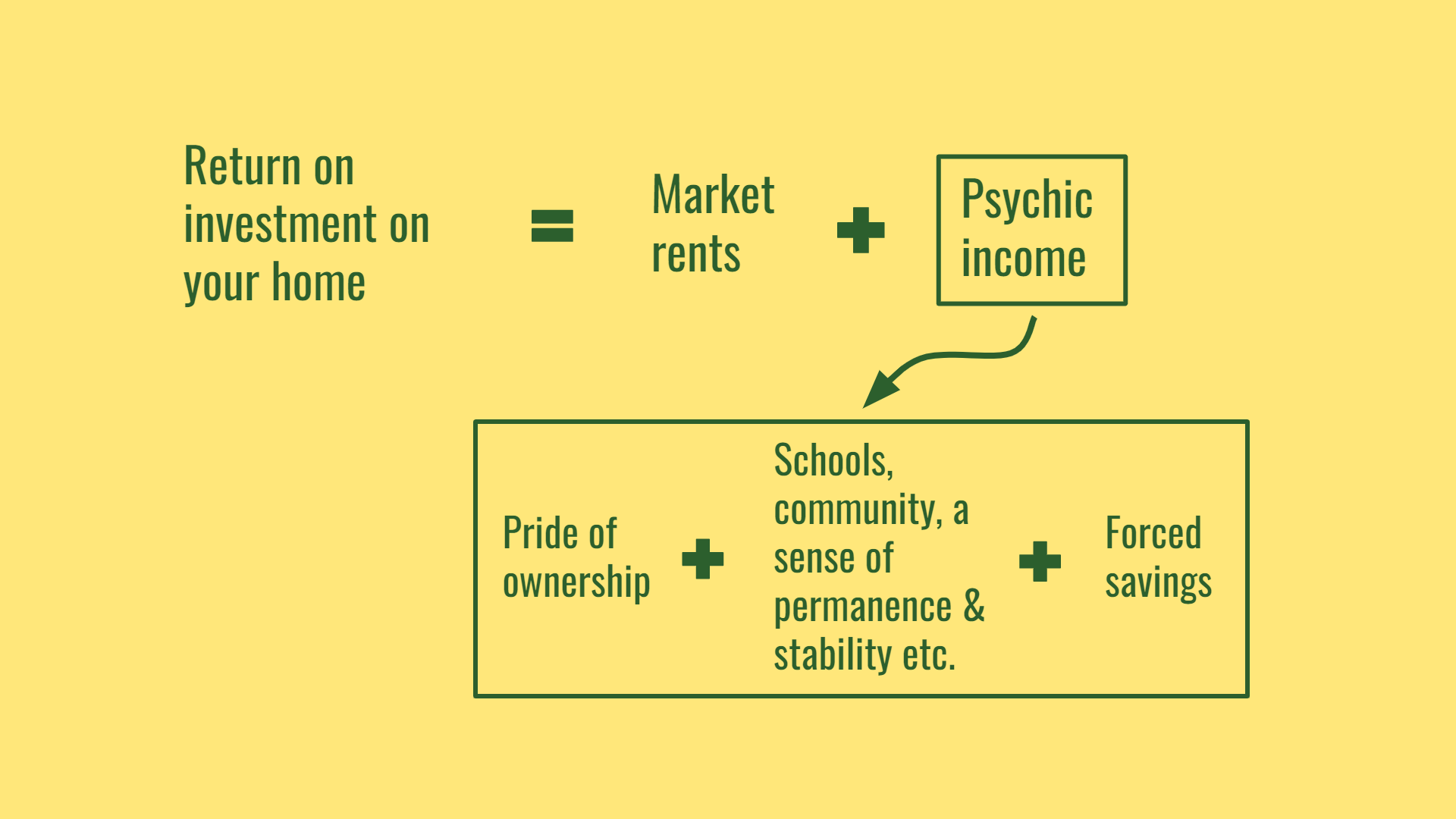
    With that as a backdrop, we now turn to the most widely held of all investments, an investment you can touch and feel and live in and that is, your home. Estimating return on that investment gets a bit murky but fundamentally, it is the market rent on that home. If your all-in costs are higher than what you can make if you were to rent your home out, you are losing money on that investment.

    But your home is not just an investment. It is your home. You derive a surplus psychic income from owning it. Schools, community, some aspect of forced savings, a sense of permanence and stability, pride of ownership – these are all pieces of that psychic income.

    It is hard to put a price tag on that surplus psychic income but that plus market rent is the return on investment on your home. If home prices rise, the market rents on those homes must rise as well. There will be lags but those lags eventually heal. If they won’t, you’ll be losing more money owning a home.

    Where it is more black and white is with owning rental real estate. Your return on that investment is the rent you collect minus your expenses. There is no psychic income there. The market decides the rent you can charge and that minus expenses becomes your return on investment in any given year.

    We now turn to investing in businesses. Businesses create wealth so you’d want to own a piece of the machine that creates that wealth. Without businesses, there is no economy. Businesses in aggregate must do well for all other pieces in the investment ecosphere (bonds and real estate) to do well. Businesses sit at the top of our economic value chain.

    You can run your own business but that requires super-human abilities. Lucky for us though, the stock market offers us a chance to own world-dominating businesses with a click of a button. You won’t ever have to get into the weeds of running them, ever. The superhumans hired to run these businesses on your behalf do all the heavy lifting.

    So, say you own a piece of a business that trades at a price to earnings (PE) ratio of 20. Earnings is another word for profits. So, the market is pricing each dollar that a business earns in a given year at 20 times that. The earnings yield hence on that business is $1/$20 = 0.05 or 5 percent.

    That is your first-cut return on investment as an owner of that business. And you being an owner (shareholder) have claims on those profits.

    But then those superhumans running these businesses on your behalf decide that they have a better use for some or all of those profits. They want to expand into new lines of businesses. They want to grow the existing lines of businesses. They want to do all of that and more to make even more profits.

    And as a profit-maximizing owner, that is what you’d want. Only the piece of profit a business cannot justifiably invest should flow to you.

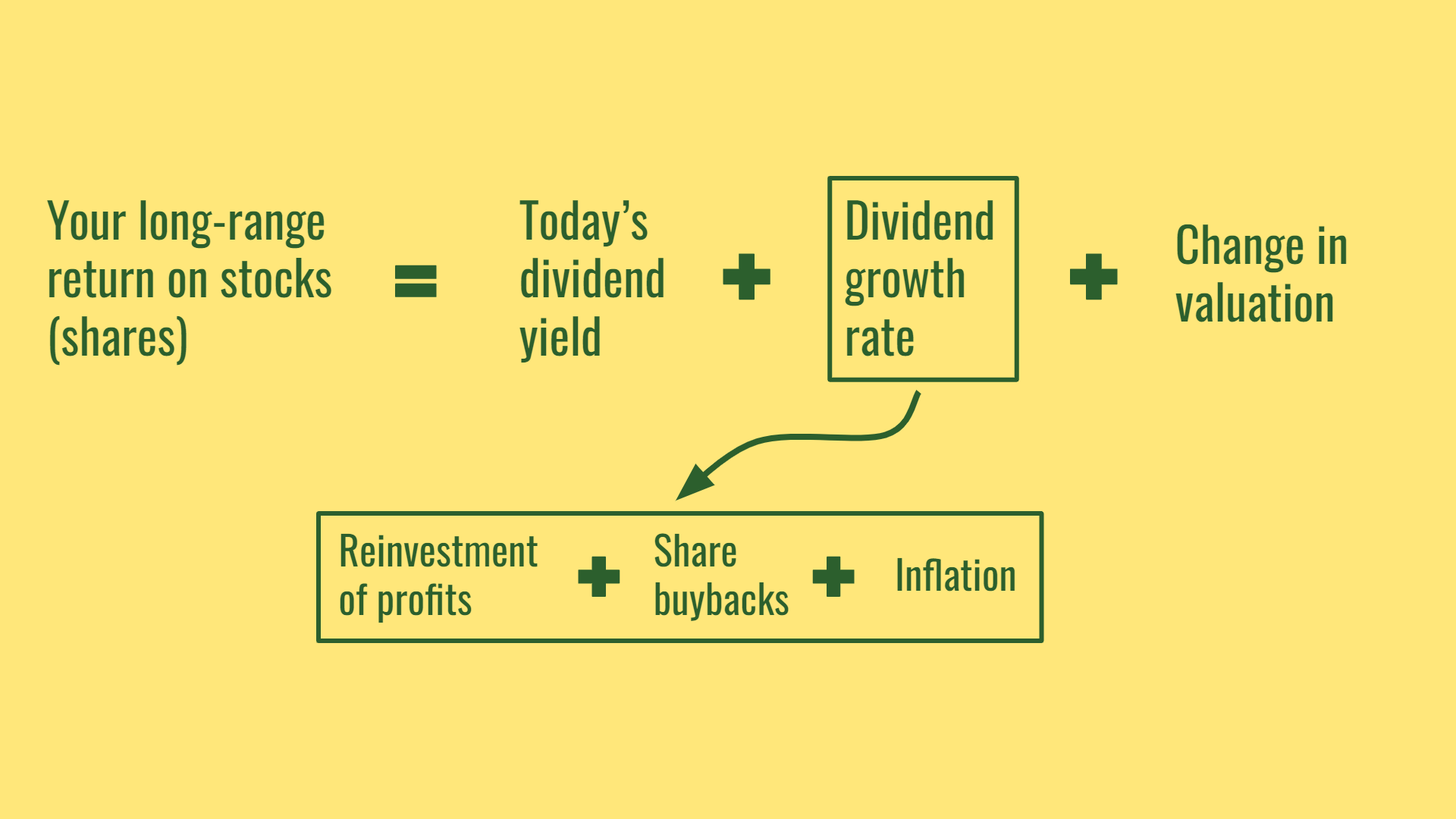
    And dividends, which are cash payments into your brokerage accounts, is one way that profit gets returned to you.

    Many businesses don’t pay cash dividends and instead, decide to do share buybacks with their surplus profits. Buying back and then retiring those shares increases your ownership stake in a business so they are an indirect form of dividend payment. You won’t see the cash coming into your accounts, but you should see the share price of the business you own rise over time.

    And many businesses like the Warren Buffett run Berkshire Hathaway exclusively prefer doing share buybacks with their gushing of surplus profits instead of paying cash dividends. Why? Because cash dividends into your accounts mean direct income to you whether you want it or not. And income coming into your accounts means paying taxes on that income.

    But with share buybacks, there is no direct payment to you. You decide when you want to take dividends by selling the appreciated shares. Share buybacks, hence, if done right by the businesses you own, are more flexible (to you) tax-wise than being forced into accepting cash dividends.

    Many businesses in the hyper-growth phase do not do either because they, in theory, should have a much better use of profits than to give them back as dividends. They need all that capital and more to expand and grow.

    But not every business deploys capital as efficiently as initially planned because projects sometimes fail. That is the nature of the game but if you own a bunch of them, more will succeed than fail. 

    But every business will eventually pay out the accrued profits back to its owners (shareholders) in the form of dividends. Those that ever won’t, fizzle out. Apple for a long time, did not pay a dividend. Now they are a dividend stalwart. And they do billions of dollars’ worth of share buybacks each year so even more indirect dividends.

    There is another big driver to your long-range returns with stocks and that is changes in valuation. That is what John Bogle, the founder of Vanguard, calls the speculative aspect of your total return. Speculative because it has nothing to do with the goings in a business and everything to do with what investors will pay for each dollar of earnings that business earns today versus in the future.

    So that business we alluded to that trades at a price to earnings ratio of 20 today, say ten years from now, the market bids up its price to earnings ratio to 30. That is a big deal because that change in what investors are willing to pay for that same dollar of earnings adds an extra 4 percent each year to your total return.

    But now your earnings yield as an owner of that business that started off at 5% when the PE ratio was 20 dropped to 3.33% at the new PE ratio of 30. Any new shares you buy from now on are not as great of a deal because your investment dollars are buying less business profits than before.

    So, if you are retired and living off your portfolio, upward changes in valuation is great. But if you are still working and contributing to your investment plan, it is not quite a disaster but close.

    What you want is downward changes in valuation in your accumulation years and not upward changes so that you continue buying a bigger and bigger slice of business profits with each contribution you make.

    But no one likes that because most don’t know how this game works, but we do.

    To summarize…

    Dividend yield on global stocks is roughly 2% today1. Add in dividend growth rate of 5 to 12% in any given year and that is your baseline expected return from stocks. Tag along changes in valuation and you get the total return. Anything more means uncompensated risk. No problem doing it with a tiny slice of your savings but overdoing it could eventually kill.

    And anything that is deemed an investment must have associated cash flows. With bonds, we have interest income. With real estate, we’ve got rents. And with stocks, we have dividends.

    Anything that does not generate cash flows is not an investment. Gold is not an investment. Commodities are not investments. Currencies are not investments. Crypto is a scam.

    So, having a rough idea about where the return on your investment comes from and how much of it should you reasonably expect is critical to preventing you from getting bamboozled out of your hard-earned savings.

    Thank you for your time.

    Cover image credit – Marlene Leppanen, Pexels

    1 December 31, 2022

  • An Obvious Secret To Wealth

    An Obvious Secret To Wealth

    The truth about the Warren Buffett class of wealth is that if somehow a Buffett were to be stripped of all his wealth, his life wouldn’t change.

    The Gates and the Zuckerbergs of the world fall into the same league. Some do indeed live larger than you and me, but you can tell that they are not into it.

    They don’t seem to care.

    They don’t seem to care because they own a different kind of wealth, the kind of wealth that is difficult to strip away. So, let me let you in on the secret to that kind of wealth.

    And it is this…

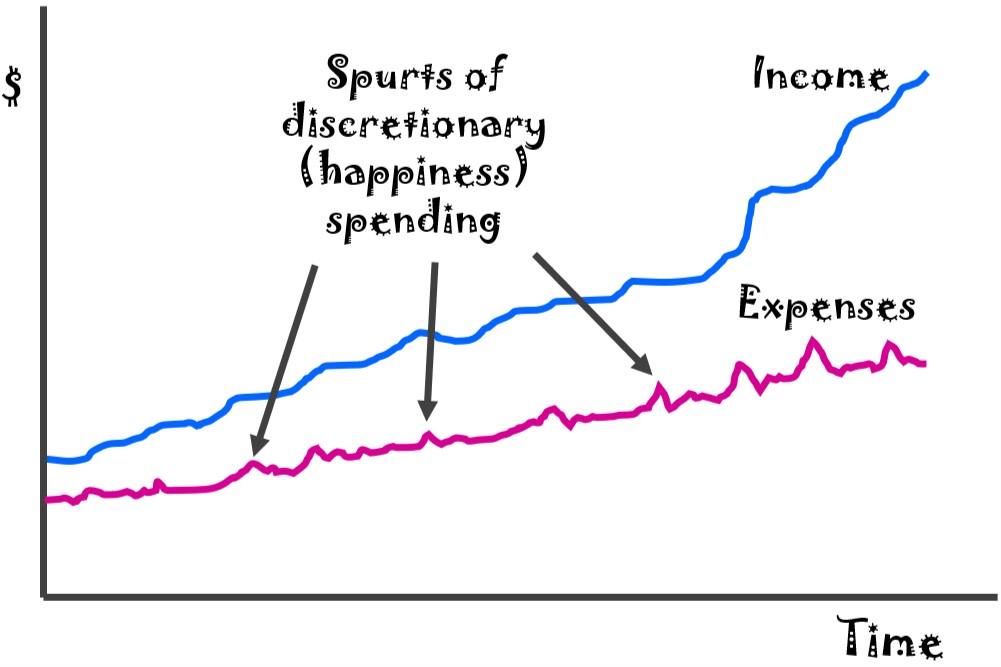
    Designing your version of a happy life that allows you to live far below your means in a perfectly contented, Zen-like state is that wealth. No rigid adherence to societal norms, no worrying about what someone thinks about the kind of car you drive or the home you live in. It works for you is all that matters.

    You practice that over time, systematically investing the difference and you’ll be set. And you won’t believe how fast you’ll be set.

    And there is a certain kind of inner peace you attain when you know you don’t have to worry about what other people think about how you choose to live. You can act poor with never a qualm. The Buffetts and the Gates of the world know this. You should too.

    And those intermittent spurts you see in the plot above are spurts of discretionary spending that you indulge in every now and then to buy experiences.

    We (my family) are not big spenders. We don’t spend much on stuff but spending on experiences is where we don’t scrimp. We have an experience budget we have earmarked for each year, and we make sure we exhaust it and then some.

    That was a hard thing for us to get around to but get around to we did. And we are glad for it. The bonds we build as a family, being in unfamiliar settings on these one-off trips, is something that is not possible in our daily grind of an existence.

    And the more we do it, the more we want to do it.

    Why spend more on experiences than stuff? Because owning stuff takes work. You have to store it, maintain it and eventually dispose of it. The more you own, the more the work.

    Experiences deliver fond memories. Possessions deliver repair bills.

    Jonathan Clements

    But back to us, we go out of our way to make these experiences of a pseudo-luxury kind in an otherwise mundane existence and there is a reason for that. Because if we had permanently designed our lives to be of the ‘good’ kind, we wouldn’t be able to relish these occasional hits. Because we as humans get used to the good life fairly quickly and then we are back on to that proverbial treadmill, always looking for more.

    But when you design your life to be way below what you can afford and then you take these occasional hits, you’ll savor those experiences forever.

    Start life in first class, and you’ll take it for granted. Occasionally get upgraded, and it’ll be a real treat.

    Jonathan Clements

    All this of course assumes a certain level of baseline income. But then we also know stories of people working menial jobs who are literal millionaires while many others making bank but do not own two nickels to rub together.

    So it is never about the quantity of wealth because even billionaires go broke. It is about how you never let that wealth take over your ego from the many important things that matter in life.

    So, lift weights, do yoga, dote on your family but keep that burn rate in check. Because any money you spend that does not uplift your family’s well-being is money wasted. You can’t optimize for everything but try you must.

    Thank you for coming to my Ted Talk 🙂 .

    Cover image credit – Sound On, Pexels

  • Return of Investment

    Return of Investment

    Joel Greenblatt, founder of Gotham Funds, says that the secret to investing is figuring out the value of something and then paying a lot less to buy it. Obvious but wish it were that easy.

    Price is not the problem. We see it quoted every day for the businesses that are publicly traded. Getting the price for a private business requires more work, but we could get it if we wanted to from a willing seller.

    Determining value on the other hand is hard and that is not because it is complicated. The math is the easy part but there is so much of the present and the future that goes into that math that it then becomes a guessing game.

    And guessing game it is for the most part.

    The quoted price for a business on any given day is almost always wrong. Wrong in the sense that it does not reflect the true value of a business at any given time. Eventually though, the price and the value of a business converge.

    To give some intuition around how to think about valuation or how I think about valuation, assume for example that the year is 1990 and a corner gas station is on sale.

    And say it costs a million dollars to own it with no business extinction risk on the horizon. Business extinction risk for a gas station these days is real with the rapid electrification of our auto fleet plus with the eventual densification of our communities that could make owning cars less of a necessity.

    But not many thought that to be possible in 1990. This just shows how hard it is to predict the future but predicting the future is how you get to the true value before the market does.

    But I digress.

    So, without knowing much about how to value a business, here you are in the year 1990 trying to make a call on whether to buy that gas station or not. How would you make that call?

    You intuitively know it already. You would want to know how fast you can recoup your original investment of the million dollars spent buying that business. Only then, you can think of profits.

    So, return of your initial investment comes first. And then comes return on your investment.

    But there of course is more to the return of investment math. There is opportunity cost in terms of the stress and the time you’d incur running that business so that needs to be factored in.

    Then there is inflation and what that does to the value of future profits that business will generate.

    Buying a business also entails risks that you’ll want compensation for. Future profits, as we know, are not guaranteed.

    Plus, what else could you have done with that million dollar? You could have bought Treasury bonds that were yielding 10 percent at the time (1990). That is like doubling your money every seven years with zero risk, with no effort and with zero stress. The gas station business, hence, better be making much more than that or else why bother.

    So, you’d demand your money back in a much shorter time than seven years. I’d say with all the hassles of running that gas station, it better double my money in five years, or I am buying Treasury bonds instead.

    The same logic applies to a $100 billion business that you could be considering owning a tiny piece of through the stock market. $100 billion is the market value which in the stock market parlance means market capitalization.

    So regardless of the market value of a business, you must still think like that owner about to buy a gas station. How long would it take for that business that you want to own a piece of to earn back $100 billion in profits?

    But how does a publicly traded business return profits back to its owners? The same way a private business does and that is through cash payments. In the stock market world, that is equivalent to a business issuing cash dividends.

    This line of thinking sometimes gets lost in all the hysteria around the day to day moves in the stock market but this is how you should think about making any long-term investment.

    I am not picking on DoorDash, but I’ll use it as an example. At its recent1 peak, it traded at a $100 billion valuation.

    It trades today2 at $22 billion so about an eighty percent decline from the peak just a year back.

    But there is someone out there who paid $100 billion for that business. They better be playing a different game than what a long-term business owner would play because that was an outlandish price to pay for that business.

    And we intuitively know why it was an outlandish price. It is hard to contemplate that DoorDash in its current form could ever make $100 billion in profits in the entirety of its existence, forget a decade.

    Now let us compare that to say Microsoft. You can buy that business outright today2 if you have $1.8 trillion lying around.

    Is that a good deal? Microsoft made $18 billion in profits last quarter. That is roughly $60 billion in a year.

    How many years would it take Microsoft to earn back your investment if you were to buy that stock (business) today?

    $1.8 trillion divided by $60 billion gets us 30 years. That is in today’s dollars. Factor in inflation and it will take much longer.

    Plus, there is a non-zero business extinction risk. Would Microsoft be around in 30 years? The market, a collective opinion of millions of participants, thinks it will be.

    The expectation also is that the profits Microsoft generates would grow over time, which in turn will shorten that return of investment timeframe.

    And hence the richer price.

    But whatever the business, what eventually counts is how soon is that business going to make back your initial outlay and then and only then come your profits. Return of investment comes first and only then you can think of return on investment.

    A perfect example of how that plays out is Warren Buffett‘s 2009 purchase of Burlington Northern Santa Fe (BNSF). BNSF is in the business of transporting stuff by rail through one of the largest rail networks in North America. As plain of a business as plain can get.

    Buffett paid $34 billion to buy that business as part of the Berkshire Hathaway portfolio. Since that purchase, BNSF has paid out $45 billion in dividends2.

    The business, hence, has paid more in dividends in the first 10 years than what Buffett paid to buy that business. Everything from now on and into perpetuity is all profits.

    That should be the expectation from every investment you make. New businesses and ventures can take longer but not an infinite amount of time.

    And this simple, back of the envelope hack is sometimes all we need to keep us out of harm’s way.

    Buying stocks of prosperous concerns may be good business – but only at a certain price. But if you will make sure you know what you are getting for your money, you will be doing what nobody does in a bull market.

    by Edwin Lefevre in Reminiscences of a Stock Operator.

    Thank you for your time.

    Cover image credit – Pixabay

    1 March 12, 2021

    2 December 31, 2022

  • Takeaways From Investment Scams

    Takeaways From Investment Scams

    Bernard Madoff ran a successful wealth management business for multiple decades. He was the chairperson of the Nasdaq stock exchange. People looked up to him until it was discovered that he was in fact running a giant Ponzi scheme. And the who’s who from Wall Street to Hollywood to Main Street were taken to the cleaners to the tune of sixty-five billion dollars in what amounted to one of the largest frauds ever perpetrated.

    So how was Madoff able to pull off a scam this big for such a long time on some of the most sophisticated people and institutions around? The same way Sam Bankman-Fried was able to allegedly swindle billions from some of the most high-profile investors in Silicon Valley. It involved some amount of fear of missing out (FOMO) and a large amount of not doing even basic due diligence.

    And unlike the stupid Ponzis we hear about, Madoff‘s scheme was cunningly clever. He promised a steady 10 percent rate of return each year regardless of the market conditions. Outlandish but still believable.

    And he marketed exclusivity. You had to be in the know to even have a chance to invest with him.

    Now when you have someone manage your money, you’d want a third-party custodian (TD Ameritrade, Fidelity, Altruist) to hold your assets. That custodian then generates all the statements, trade confirmations and the necessary tax paperwork.

    That was not the case with Madoff‘s investment management business. Not only was he managing his clients’ money, but he also had custody of their assets, a giant red flag.

    So, if you wanted to become his client, you’d open your accounts at Bernard L. Madoff Investment Securities LLC, a custodian he ran and controlled. All your investments, which later turned out to be made-up, would be held there. You’d write a check to his firm if you had to move money into your accounts instead of to a third-party custodian.

    And because he owned the firm, he was able to forge all the statements and trade confirmations. Investors at his firm thought they were getting rich but that was all on a made-up piece of paper. Investors who entered late were paying for the investors that sold and cashed out their investments until he ran out of new investors to bilk.

    So that was the gist of the Madoff scam but dig into any one of the many others we hear about, and they have similar overlapping themes. A few samples below and you do not have to look hard to find them.

    Charles owned a company named Infinite Equity Strategies, LLC which he promoted as a financial strategies company that had not “lost a dime in the recession.” Charles held himself out as a financial specialist and safe money advisor, who could help his clients put their retirement funds into products that would provide “high returns without high risk.”

    Charles was not registered with the State of Maryland, nor the Securities and Exchange Commission as an investment adviser.

    Charles told his clients to liquidate their current investments and provide him with the funds, so that he could place the money into safer investment accounts with higher returns. However, Charles instead deposited the funds into his own accounts

    Charles created fraudulent letters and account statements purporting to be from well-known financial products and services providers, in order to lead his clients into believing that he had in fact deposited their money into safe investment products as promised.

    Baltimore “Financial Advisor” Pleads Guilty to Defrauding over 22 Clients of $890,000 by The United States Department of Justice, January 26, 2015.

    As alleged in the indictment, he falsely told clients and prospects he could guarantee annual returns of 10% on their principal investments, regardless of how volatile the stock market might be, and that he could make an annualized 19.2% return on retirement investments in which clients would also keep their principal.

    From February 2014 through November 2021, Lopez received about $19.4 million from clients. But, during the same period, instead of investing mainly in stocks and bonds for clients, Lopez allegedly bought $13.3 million in precious metals, such as gold and silver.

    After securing client money, Lopez allegedly generated periodic account statements, “purportedly showing substantial investment gains,” according to the Justice Department.

    Arizona ‘Advisor’ Charged With 27 Counts of Mail, Wire Fraud by Jeff Berman writing for Think Advisor, January 9, 2023

    Robert Shapiro, the founder of the Woodbridge group of companies, will spend 25 years in prison after pleading guilty to charges that he orchestrated a $1.3 billion real estate Ponzi scheme that bilked thousands of investors out of hundreds of millions of dollars. Nearly two years ago, the Securities and Exchange Commission sued Shapiro for allegedly running a Ponzi scheme that defrauded more than 8,400 investors by promising high returns on real estate investments.

    Woodbridge founder Robert Shapiro gets 25 years in prison for $1.3 billion Ponzi scheme by Ben Lane writing for Housing Wire, October 21, 2019.

    The ads popped up on social media. Earn as much as 7% interest on your savings by opening an account with a new start-up. In this historically low interest rate environment — when the average savings account pays just 0.09% annual percentage yield — the offer might have sounded too good to be true. Many of the company’s customers are now wondering if indeed it was.

    This start-up promised higher interest rates on savings. Now some customers are struggling to get their money back by Lorie Konish, Scott Cohn & Dawn Giel writing for CNBC, October, 28, 2020.

    According to court documents, Satish Kumbhani, 36, of Hemal, India, the founder of BitConnect, misled investors about BitConnect’s “Lending Program.” Under this program, Kumbhani and his co-conspirators touted BitConnect’s purported proprietary technology, known as the “BitConnect Trading Bot” and “Volatility Software,” as being able to generate substantial profits and guaranteed returns by using investors’ money to trade on the volatility of cryptocurrency exchange markets. As alleged in the indictment, however, BitConnect operated as a Ponzi scheme by paying earlier BitConnect investors with money from later investors. In total, Kumbhani and his co-conspirators obtained approximately $2.4 billion from investors.

    BitConnect Founder Indicted in Global $2.4 Billion Cryptocurrency Scheme by The United States Department of Justice, February 25, 2022.

    He is accused of scamming thousands of billions of naira after promising a 25 percent Return on Investment (ROI) monthly.

    Baraza: EFCC declares Christ Embassy Pastor Miebi Bribena, wife wanted for ‘N2bn fraud’ by Wale Odunsi for Daily Post, June 10, 2022.

    Nutty, who frequently posted dancing and singing videos to her 847,000 YouTube followers, also claimed to be a successful forex trader in her Instagram bio and posted advertisements for private forex trading courses to the platform. She also claimed to be able to deliver major returns to her investors — promising 25% returns on 3-month contracts and 30% returns on 6-month contracts, according to Asian trading site NextShark.

    Thai authorities have issued an arrest warrant against a popular YouTuber accused of scamming followers out of $55 million by Mara Leighton writing for Insider, August 31, 2022.

    All the victims in this case were promised something that was too good to be true.  Those in the Ponzi scheme were all assured a high rate of return in a short amount of time, while the victims of the Bitcoin advance fee scheme were guaranteed above current market value for their Bitcoin.  This multi-million dollar case is a reminder for anyone thinking of investing: Be skeptical of any investments with larger than life promises, because if it sounds too good to be true, it probably is.

    Instagram Personality Known as “Jay Mazini” Pleads Guilty to Wire Fraud, Wire Fraud Conspiracy and Money Laundering by The United States Department of Justice, November 2, 2022.

    Chavez is the CEO of a company called CryptoFX, which in recent years has solicited money from people in Latino communities to invest in crypto currency in return for potential riches.  “We already have more than 20 people becoming millionaires,” Chavez tells his audience in the video.  “Over five thousand people …. literally mak[ing] over $500,000 …. And there are many, many, many, many – literally paying off all their debts.”

    The SEC suit says Chavez and his company took in money from “unsophisticated investors” and led them to believe they could earn a “90%  [profit] in [just] six months.”  But – instead of investing that money – the SEC says Chavez and Benvenuto turned around and paid most of it out to previous investors, who were often family and friends.  That’s the “Ponzi” payment.  The government also alleges that Chavez and Benvenuto also spent investors’ money on themselves, for homes, cars, credit cards, luxury retailers, a hotel residence, travel, restaurants, jewelry, adult entertainment, and a hair salon.

    Chicago Latinos Say They Were Lured Into Investing in a Ponzi Scheme by NBC Chicago, January 18, 2023.

    I can go on and on but with all these stories, the perpetrators are preying on our innate weakness of not knowing how the financial markets work. And many a times, even the folks perpetrating the scams are clueless.

    Some takeaways hence…

    • The 10-year Treasury bond is your go-to baseline when it comes to the safest of all investments. It also aligns with the minimum timeframe you should consider any investment for. Use its yield as a backdrop in making any investment decisions. Anything that yields more than that means there is risk. That is not necessarily an issue as long as you understand those risks. Stocks, for example, should yield more than government bonds because business profits are unpredictable. Interest income from bonds is not. So, with stocks, you want to get compensated for that unpredictability. But there must be underlying profits or interest income or rents (with rental real estate) to call an investment an investment. Do not invest in things that are not investments.
    • Investment promises or guarantees of any kind on anything except on government bonds and bank savings accounts is a telltale sign of fraud. Or a sign that you are about to be sold an egregiously expensive insurance product that you should stay away from anyway.
    • Stable returns on investments other than, say, on government bonds is also another sign of potential fraud. Don’t care if it is a 3% return or a 10% return but the lack of variance is a giant red flag. Stock market type returns with savings account type stability do not exist.
    • The siren song of effortlessly getting rich sounds enticing but it is never real. There is always a catch. If you want to eventually get rich though, a slow meticulous process of steadily acquiring income producing assets is the way. That takes patience and an adherence to the fundamentals of what financial markets can reliably deliver over the long term but anything beyond that and you are asking for it.
    • If you don’t know where the yield is coming from, it is coming from you. Stocks pay dividends, bonds pay interest and rental real estate pay rents. Any investment without the prospect of ever generating a yield is investing based on vibes. I do not invest based on vibes and neither should you.
    • Your financial advisor should be a fiduciary. Look them up at FINRA to make sure they are registered before even taking that first step. And walk away if they are not.
    • Your assets must be held at a third-party custodian. If your financial advisor asks you to move assets to a company he or she controls, run. That is Madoff-proofing your investments to the best extent possible.
    • If you don’t know how your money is to be invested, you need to find out. You don’t have to know every itty-bitty detail on the mechanics of investment finance but a basic understanding of the investment strategy being implemented by your advisor is a great start. Ask questions and a lot of them until you are comfortable and confident. That is one reason I write because without that, how will you ever build that conviction to stick around with your plan when the market takes its occasional dumps. You won’t have the conviction, and you will guarantee bail. I write to build that conviction to make sure you never bail.
    • Channel your savings to align with the workings of the global economy. Is there an economic value-add to whatever you are investing in? Stocks are ownership stakes in businesses. And businesses form the lynch pin of the global economic engine so they of course must form the base of any financial plan worth its salt. With bonds, you become a lender to businesses and governments. They use your money to do whatever good they are borrowing that money for. With real estate, you provide shelter. These are all value creation endeavors. Anything that is not a value creation endeavor (day trading, forex, crypto, MLMs) is a recipe to lose some or all your money, eventually.

    In short, anything that sounds too good to be true, it almost always is.

    Unfortunately, for many investors, greed has a funny way of overcoming common sense. Do not let greed swindle you out of your life savings.

    Thank you for your time.

  • Investing Is Hard

    Investing Is Hard

    Warren Buffett says that investing is simple but not easy.

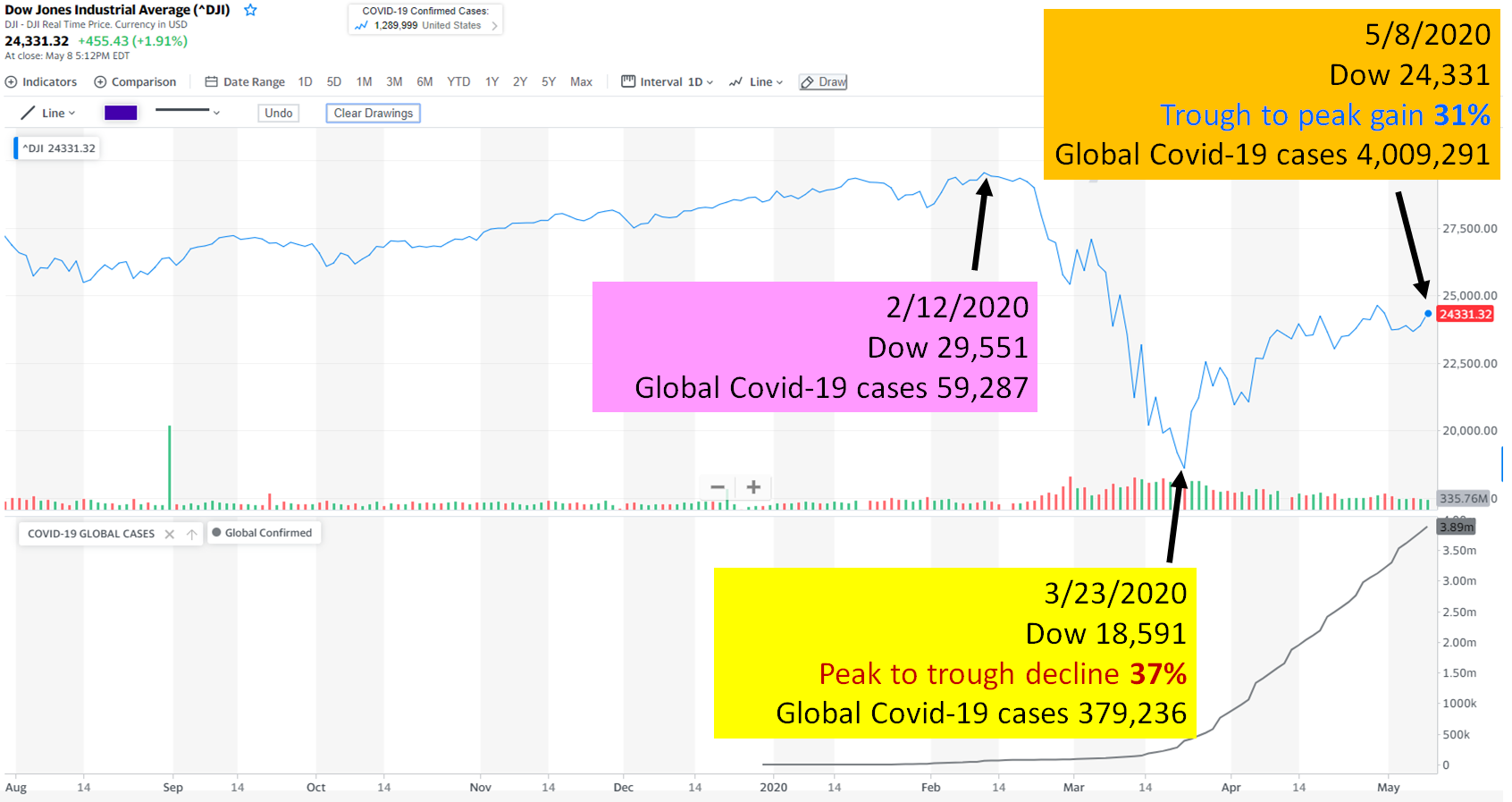
    Let us reconcile these two data points from two different news sources at the onset of COVID.

    The US economy lost 20.5 million jobs in April, the Bureau of Labor Statistics said Friday — by far the most sudden and largest decline since the government began tracking the data in 1939.

    Record 20.5 million American jobs lost in April. Unemployment rate soars to 14.7% by Anneken Tappe, CNN Business, May 8, 2020

    The same day, this headline…

    Dow surges 455 points as economic-reopening hope overshadows historic job losses.

    Carmen Reinicke in the Business Insider, May 8. 2020

    Or how about this? The Dow peaked at 29,551 on Feb 12th, 2020, when the worldwide Corona virus cases were just getting started. By March 3rd, 2020, the Dow would fall by 37 percent to 18,591. This was the steepest, fastest fall ever. The recorded virus cases stood at 379,236 that day.

    But then all of a sudden, the Dow changed direction, rocketing 31 percent off the lows while the virus cases kept on surging.

    That sharp violent turn off the bottom, that is a 2,100-point (11 percent) gain in a single day, the biggest point gain ever.

    And that is typical. Most gains occur in a handful of days when you least expect it, another nail in the coffin to timing these things. But the economic news continued to remain grim.

    So, what warranted that surge in stock prices? How could we have double-digit unemployment with the world literally having changed and yet, the stock market responds as if we are back?

    That is because the stock market is a discounting mechanism. It discounts the future to arrive at prices today. We have done that math before.

    So, say you own a business that was supposed to generate a series of profits in the future. The stock market takes those profits into account to come up with a fair value for that business and that is what we see quoted each day.

    And then something like a pandemic happens. That would impair a few years’ worth of those profits, so the market then revalues that business to a new price.

    But then the market realizes that the news is not as grim as what was initially assumed so the market then reprices that business again.

    There is no guarantee though. The market’s assessment could be wrong, and it does get things wrong from time to time but that is in the short run. Eventually though, the price and the value of a business will converge.

    No one can of course predict these things. You look up any publication in January of 2020 and not a mention of how our world was about to change.

    And no one knew how long it would take for things to normalize from the depth of that pandemic or what form that normalizing would take. Most were just voicing opinions, like below…

    We’ve seen the lows in March’ for the stock market, says man who called Dow 20,000 in 2015, ‘and we will never see those lows again.

    A quote by Jeremy Siegel of Wharton School of Business in this MaketWatch piece published on March 9, 2020

    Did he know? Of course not.

    Neurologist turned investment adviser, William Bernstein says that the people who are good at something tend to be consumed by self-doubt, whereas the people who are incompetent are always supremely self-confident. Prof. Siegel, of course, is not in that camp but that is the usual reality.

    And it makes sense. If you are not confident in whatever trade you are in and if you want to get better, you’d work at it. But you will never be done because the more you dig in, the more there will be things to learn and relearn. So, you keep on digging for more and you keep on getting better at it.

    And hence it is no surprise that the very best doctors tend to be consumed by self-doubt. The real quacks, on the other hand, are always uber-confident.

    It is the same with investing. If you think you have cracked the code, that is a dangerous sign.

    But it is not just about cracking the code because if you’ve got the process right that is grounded in the fundamentals of investment finance and a knack to continuously adapt and learn, you’d have the conviction to stick through whatever the markets throw at you.

    And that is what will ultimately count.

    Thank you for your time.

    Cover image credit – Brett Sayles, Pexels