Category: General Investing

  • The Three-Legged Stool

    The Three-Legged Stool

    Post-World War II retirement planning was easy. We had pensions. There was income from Social Security. And we had our own savings. Those three things made up for a sturdy three-legged stool that took us though a worry-free retirement.

    Pensions have all but gone the way of the dodo bird. The Social Security situation is not looking as hot. All we are left with is our personal savings. How good of a job we do preserving and growing our savings is what will count.

    Charles D. Ellis et al talk a lot about these things in their book, Falling Short.

    Just 30 years ago, most American workers were able to stop working in their early sixties and enjoy a long and comfortable retirement. This “golden age” of retirement security reflected the culmination of efforts that started more than a century ago when employers first set up pensions. Gradually, over decades, we built an effective system with Social Security and Medicare as the universal foundation and traditional pensions – where the employer was responsible for all the saving and investment decisions – providing a solid supplement for about half the workforce. The increasing provision of retirement support allowed people to retire earlier and earlier. This brief golden age is now over.

    Pensions allowed us to pool life expectancy risk with our fellow plan participants, which meant not needing to save as much. And with professional money managers at the helm of these plans meant no thinking about retirement planning, ever. They did their job, and we did ours.

    401(k)s replaced pensions. That was never the intent though. But here we are, and things will never be the same again.

    The unique structure of the 401(k) can be attributed to the fact that, when 401(k) plans began to spread rapidly in the 1980s, they were viewed mainly as supplements to employer-funded defined benefit pension and profit-sharing plans. Since participants were presumed to have their basic retirement income needs covered, they were given substantial discretion over key 401(k) choices, including whether to participate, how much to contribute, how to invest, what to do when changing jobs, and when and in what form to withdraw funds during retirement. Today, 401(k)s still operate largely under these same rules even though they are now the primary plan for most workers. As a consequence, workers have almost complete discretion over investment and savings choices, bear all the market risks, and face the risk of either overspending and outliving their retirement savings or spending too cautiously and consuming too little.

    The three-legged stool of the past was in fact quite generous. We rarely had to dip into our savings.

    During the 1980s and 1990s, Social Security benefits took households a long way toward meeting the 75 percent income replacement goal. At that time, the replacement rate from Social Security for the typical earner at 65 was about 40 percent. If that earner had a nonemployed wife, the Social Security benefit rose to 60 percent. Add any employer-sponsored pension income to that base and the total replacement rate would match or exceed the 75 percent target.

    Social Security is not going to fall apart but a fix is needed. It is just too important a deal.

    By law, Social Security cannot spend money it does not have. Therefore, if nothing is done before the trust fund reserves are exhausted in 2033, Social Security benefits would be cut by about 25 percent to match benefits going out with taxes coming in. The replacement rate for the typical worker aged 65 would drop from 36 percent (today) to 27 percent (starting 2033) – a level not seen since the 1950s.

    And a fix is needed because the current state of retirement does not look as hot. I know this is not my audience, but this is the average Joe.
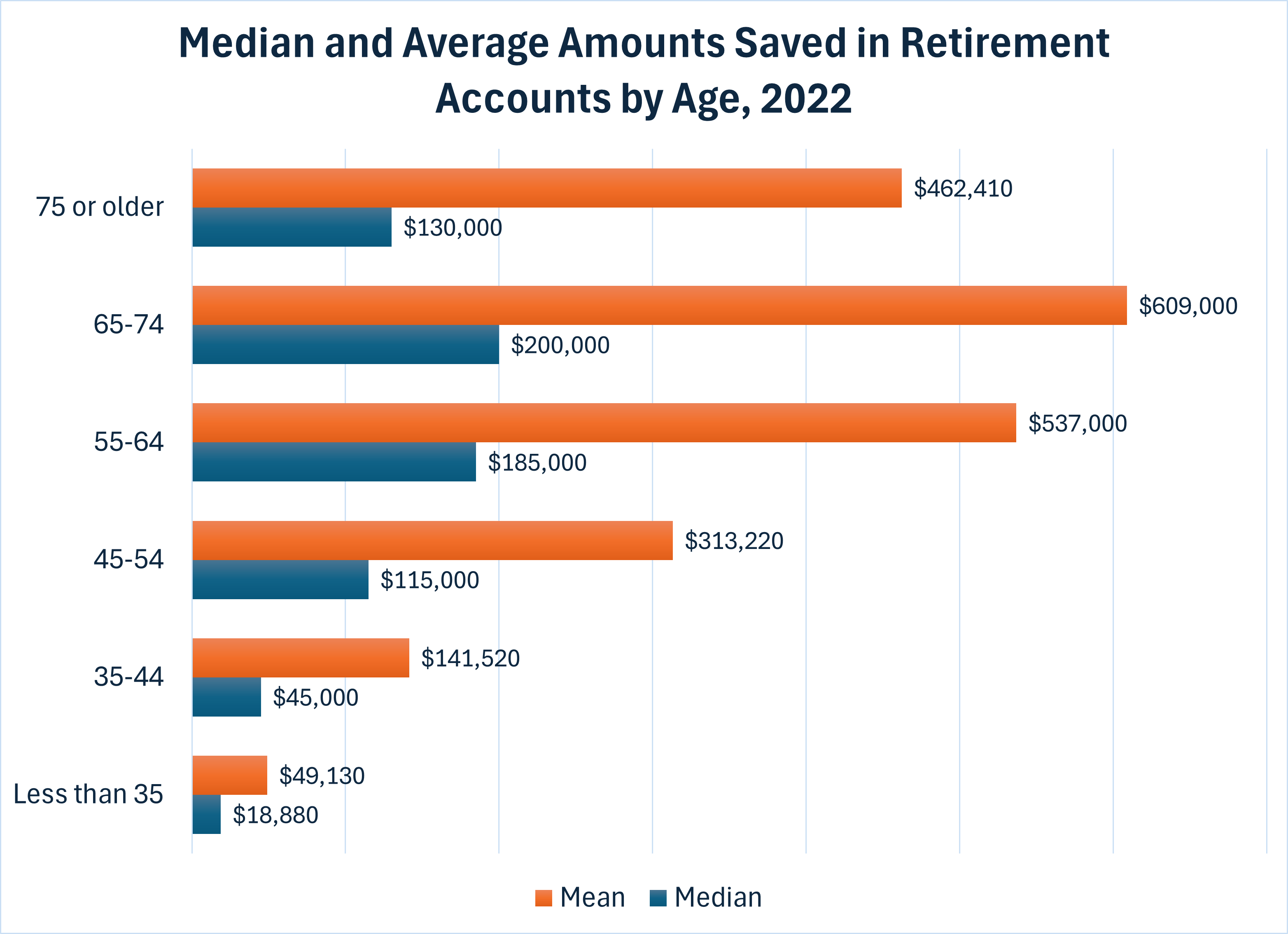
    Source: Survey of Consumer Finances

    And let me explain why the situation does not look as hot. The median wage for a 64-year-old about to retire, based upon government data is $64,000. Add spouse’s wage and that takes it to $100,000.

    A 75 percent income-replacement goal in retirement means $75,000 that’s needed to support the same pre-retirement lifestyle.

    Say half of it comes from Social Security which means another $37,500 must come from personal savings. Safe money to retire on is 25 times the income you need in your first year of retirement. That is 25 x $37,500 which is almost a million dollars.

    The median amount saved though is $185,000. And we are talking median households which implies half of us are doing way worse.

    So, what do you do if you find yourself in this situation? It’s a hard pill to swallow but delaying Social Security benefits to age 67 and preferably to age 70 helps bigly. That may mean working longer but some amount of purposeful work is not going to be the end of you.

    In fact, it might keep you around longer and happier.

    But people who fare the best in retirement find ways to cultivate connections. And yet, almost no one talks about the importance of developing new sources of meaning and purpose.

    One participant, when asked what he missed about being a doctor for nearly 50 years, answered: “Absolutely nothing about the work itself. I miss the people and the friendships.”

    An 85-year Harvard study on happiness found the No. 1 retirement challenge that ‘no one talks about’ by Marc Schulz, CNBC, March 10, 2023

    And to the young folks starting out, if you want a life of choices, you got to get on a plan like right now. The difference between starting to save at age 25 to get to that same 75 percent income replacement goal in retirement means you have to save only 12 percent of your income. That instead of having to save 35 percent of your income if you wait till age 45. Imagine saving 35 percent of your paycheck while raising a family.

    Thank you for your time.

    Cover image credit – Karolina Grabowska, Pexels

  • The Magnificent Seven

    The Magnificent Seven

    Bank of America strategist Michael Hartnett coined the term “The Magnificent Seven” or Mag 7 for a group of stocks that have come to dominate the stock market lately1. These stocks are Apple, Microsoft, Alphabet, Amazon, Nvidia, Tesla and Meta.

    Markets are long-term efficient but sometimes they can get short-term nutty. I feel some of that nuttiness has found its way into these stocks. Let me explain why.

    The combined market value of all Mag 7 stocks is 14 trillion dollars. The total value of all businesses in the Russell 1000 index (the entire US stock market) is forty-three trillion dollars. These seven stocks hence are 30 percent of the entire value of the stock market. These are world-class businesses. They own their markets so clearly some of that valuation is justified.

    But if you are buying these stocks today, you are making an active bet in a concentrated piece of the stock market with one of the most overcrowded and over-owned group of stocks. So quite naturally, you’d want to get compensated for taking on that risk.

    Even if you are holding these stocks that you acquired several years ago, you are still making an active bet because any permanent loss in value from today’s prices is real money lost.

    So, if I were you and if I were taking on a concentrated stock risk by investing in them, I would at least want a double in five years and 4x my money in ten. Else why take the risk.

    Fourteen trillion dollars is today’s value of the Mag 7 stocks so four times that makes fifty-two trillion dollars in ten years. That is more than the market value of all US stocks today.

    But let us continue playing. Assuming a seven percent growth rate for the rest of the stock market and with the Mag 7 stocks quadrupling in 10 years, these companies would then come to represent 60 percent of the total market value of all US stocks.

    That will not happen. That should never happen. The economy will otherwise stagnate.

    Next, let’s consider valuation. The total profit earned by the Mag 7 companies is five-hundred billion dollars. That is annualizing their last quarter’s profit numbers so that again is being overly optimistic. Because we don’t know if the gigantic profits these companies have been churning lately are long-term sustainable or would they revert to a more normal pace once the current mania subsides.

    But let us assume they are real and sustainable. Five-hundred billion dollars in total profits against a 14 trillion dollars market value for the Mag 7 stocks equates to a price to earnings ratio of 27.

    Flip that ratio around and we get an earnings yield of 4 percent. Ten-year Treasury bonds these days yield the same, but you are not buying these stocks for a mere 4 percent rate of return each year. You are buying them to 4x your money in ten years.

    Total profit for all publicly listed US stocks today is 1.65 trillion dollars. Mag 7 is 500 billion dollars or 30 percent of the total profits so these stocks making up 30 percent of the total stock market value makes sense.

    But if you are looking to 4x your money in ten years with these stocks means profits also must at least do 4x. That is two trillion dollars in profits, more than the combined profits of all US stocks today.

    And that assumes the market continues affording these companies a price to earnings ratio of 27 ten years from now. If the market realizes that’s nutty, that price to earnings ratio could drop to say 20 or 15. There is no 4x your money happening then.

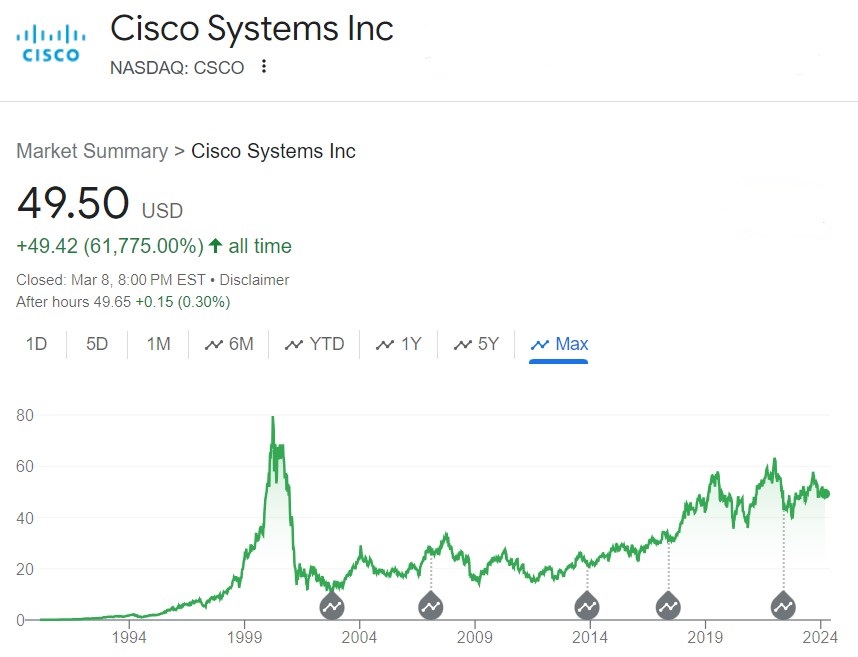
    I know quite a few of you are in this fortunate situation to work for one of these companies and you likely have an outsized percent of your wealth tied up in these stocks. It is hard to make the call but you must have a plan to trickle out of that single-stock risk. Or you could be sitting on the next Cisco Systems, still waiting for the stock to recover to the highs reached 25 years ago.

    Thank you for your time.

    Cover image credit – Miguel Padrinan, Pexels

    1 March 8, 2024

  • How Estate Taxes Work & Why They Are A Good Thing

    How Estate Taxes Work & Why They Are A Good Thing

    We have estate taxes here. That means if you die with too much money, you (your estate) have to pay a wealth tax beyond all the taxes you have already paid while you were alive. The estate tax rates can be as high as 40 percent but why should you care? You’ll be dead.

    But not everyone’s estate is subject to that tax. If you die with less than thirteen million dollars as a single or twenty-six million dollars as a couple, your kids inherit all of that tax-free1. That is the estate tax exemption. Only money beyond that is subject to an estate tax.

    But there is an even better deal if done right for folks who are rich but not Bezos rich. Many folks I know are saving to a point where they’ll leave a bunch of money behind. They just plan conservatively.

    So, say you are one of them and all you did during your working years was to buy investments and you kept on buying. Quite naturally, you’ll retire with a pile of money.

    And then you start spending it. But your portfolio will compound at a rate faster than you will be able to spend.

    And then you die (sorry).

    So, say you have a daughter who you’d like to inherit your investments. And say those investments total up to ten million dollars and you paid one million dollars to buy them. If you were to have sold them when you were alive, you’d have to pay capital gains taxes on nine million dollars of profits.

    But if your daughter inherits that ten-million-dollar portfolio, it is like she bought the investments herself. She got a step-up in cost basis to ten million dollars. No taxes are due on the nine million dollars in profits.

    And that is because the inherited amount is under thirteen million dollars (estate tax exemption for singles).

    The estate tax exemption is not because the system wants your daughter to inherit a tax-free investment portfolio. The exemption exists to protect the thousands of farms and small businesses that are valued in the ten-to-twenty-million-dollar range to not be disrupted when the owner passes away.

    Why estate taxes are a good thing?

    They might not be good for you and me if you’ve worked hard and built something that allowed you to create that fortune. You’ll be naturally pissed if the government were to tax half of it away.

    But capitalism is a winner take all world. And wealth in that system naturally flows to owners of capital.

    So, if Bezos were never to be taxed on his estate, his wealth would continue to grow to own a bigger and bigger chunk of the economy. He will never be able to spend that wealth.

    That means less money for the rest of us. That means less consumption. That means less investment. That means less competition. That means less customers. Because when you don’t have the money, you won’t be buying much. The economy eventually stalls. Human progress, hence, stalls.

    So, spreading that wealth around is a good thing. It might not be a good thing for you and me, but it is a good thing for the system. Now how efficient a job the government does spending our tax money, that is a debate we can have.

    Thank you for your time.

    Cover image credit – Johannes Plenio, Pexels

    1 As of 2024

  • The More Complex Your Investments, The More Likely They’ll Blow Up

    The More Complex Your Investments, The More Likely They’ll Blow Up

    Robert Stock earned a bachelor’s degree in physics from Princeton university and a doctorate from Carnegie Mellon. He spent nine years working as a researcher in the Directed Energy Group at MIT’s Lincoln lab where he performed simulations of high-energy laser systems for missile defense.

    He later switched careers to money management and ran the Spruce Alpha fund. The fund’s investment philosophy…

    The Spruce Alpha Fund seeks to generate high alpha, low beta, and low correlation returns by identifying daily-resetting, highly-levered ETFs experiencing volatility decay, and shorting them in bull and bear pairs.

    Clear? Not to me. I could dig a bit deeper, but I do not have the patience. I do not want to have the patience.

    In less than a month, the fund went from being operational to going belly-up. Mr. Stock has since moved on and is doing just fine. Investors in the fund though lost bigly.

    James Cordier, CEO of the now defunct OptionSellers.com ran a $150 million hedge fund. He was a long-time proponent of using ‘naked’ options to trade in the volatile energy market. In several articles and in a book, he touted the potential rewards of his investment strategy in producing consistent returns. He had this to say in one of the interviews

    We target 25% return per year. In 2015, which just ended, we achieved 28% return for our clients (net of fees). Which is good considering the stock market returned about 2% and most of the hedge fund guys had a lousy year.

    A mere months later, this headline…

    Wiped-out hedge fund manager confesses he lost all his clients’ money in emotional video on YouTube

    The reason Mr. Cordier lost all his investors’ money…

    After months of relatively subdued price action, volatility in U.S. natural gas futures returned with a vengeance last week, surging as much as 20 percent on Nov. 14 for their biggest intraday gain since 2010. The price swings in gas, as well as in oil, were a “rogue wave” that “likely cost me my hedge fund.”

    Who knew selling naked options can turn catastrophic? These schemes work well until they don’t, just like this story below…

    When William Mark decided to get back into investing after the 2008 financial crisis, he looked past stocks and bonds. Needing to play catch-up with his retirement portfolio, the piping engineer decided to bet on a complicated product he hoped would deliver double-digit annual returns.

    It worked so well—earning him 18% a year in dividends, on average—that he eventually poured $800,000 into the investments, called leveraged exchange-traded notes, or ETNs. When the coronavirus pandemic hit, he lost almost every penny.

    “I’m 67 years old and I’m basically bankrupt in just two weeks,” Mr. Mark said.

    Bankrupt in Just Two Weeks’—Individual Investors Get Burned by Collapse of Complex Securities by Akane Otani & Sebastian Pellejero, The Wall Street Journal, June 1, 2020

    Alliance Structured Alpha funds managed tens of billions of dollars for pension funds and endowments. They ran a complicated option-selling strategy, purported to produce stock-like returns with low risk.

    The hedge fund blew up spectacularly during the Covid crash. It turned out they weren’t hedging much when their mandate was to hedge.

    The stories can go on and on. And the folks running these schemes are no dummies. They are the best in their class.

    But these supremely overconfident gunslingers are precisely the folks that should frighten you. These Type A money managers use complexity as a mirage to mask their Vegas-style investment strategies. They will double your money in a year and then suddenly you lose it all.

    Takeaways, hence…

    • Easy money-making opportunities are seldom real. Because if they were real, they would be exploited out of existence in a split-nanosecond by an army of some of the world’s best and brightest.
    • Claims of returns significantly exceeding bond yields with little to no risk is a fairytale you will be told to sell you on overly complex investments with non-transparent sources of returns. Don’t believe any of that. Ask questions, be skeptical. Do not assume that just because brand-name firms or authority figures are involved that all is well.
    • You cannot build conviction in things you do not understand. All investments go through good times and bad. And when you do not understand what you own, you will not know if those bad times are temporarily bad or forever fatal. Losing conviction then is when you make big mistakes; like selling when you should instead be buying.
    • It is easy to assume that investing is hard and because it is hard, you need to make it complex. But the more complex you make it, the more risks of the unknown kind you invite. Those unknown risks are what causes portfolios to go poof.
    • It is not the end of the world if you are late to the investing game. But shortcuts to lost time are few and far between. There are knobs you can tweak that offer outcomes with far more certainty but attempting to fast-track the process is a fool’s errand.
    • Ninety percent of investing is managing yourself and not your money. Once you build a good-enough plan, what matters, and what will always matter, is a commitment to that plan – next month, next year, for life.

    Thank you for your time.

    Cover image credit – Rabin, Pexels

  • An Investment’s Return vs. An Investor’s Return

    An Investment’s Return vs. An Investor’s Return

    The value of an investment today is the sum of all the cash flows that investment is going to generate over the life of that investment, discounted to the present at an appropriate discount rate. That applies to anything that is deemed an investment.

    And then there is the Efficient Markets Hypothesis that states that all available information about an investment is reflected in the price of that investment at any given time. If and when new information about that investment becomes available, it gets instantaneously reflected into its price.

    The fundamental assumption that underlies all these investment truisms is that investors are rational beings. That we as a collection of market participants would always make optimal decisions that benefit us in the long run. That self-interest, hence makes all these truisms plausible.

    But plenty of evidence proves that we behave anything but rationally. We like belonging in herds because nature has made us make decisions more comfortably in herds. We find safety in numbers.

    Any wonder then that we pile into the same investments at the same time and pay top dollar for them when that behavior is exactly the reason most investors underperform over time.

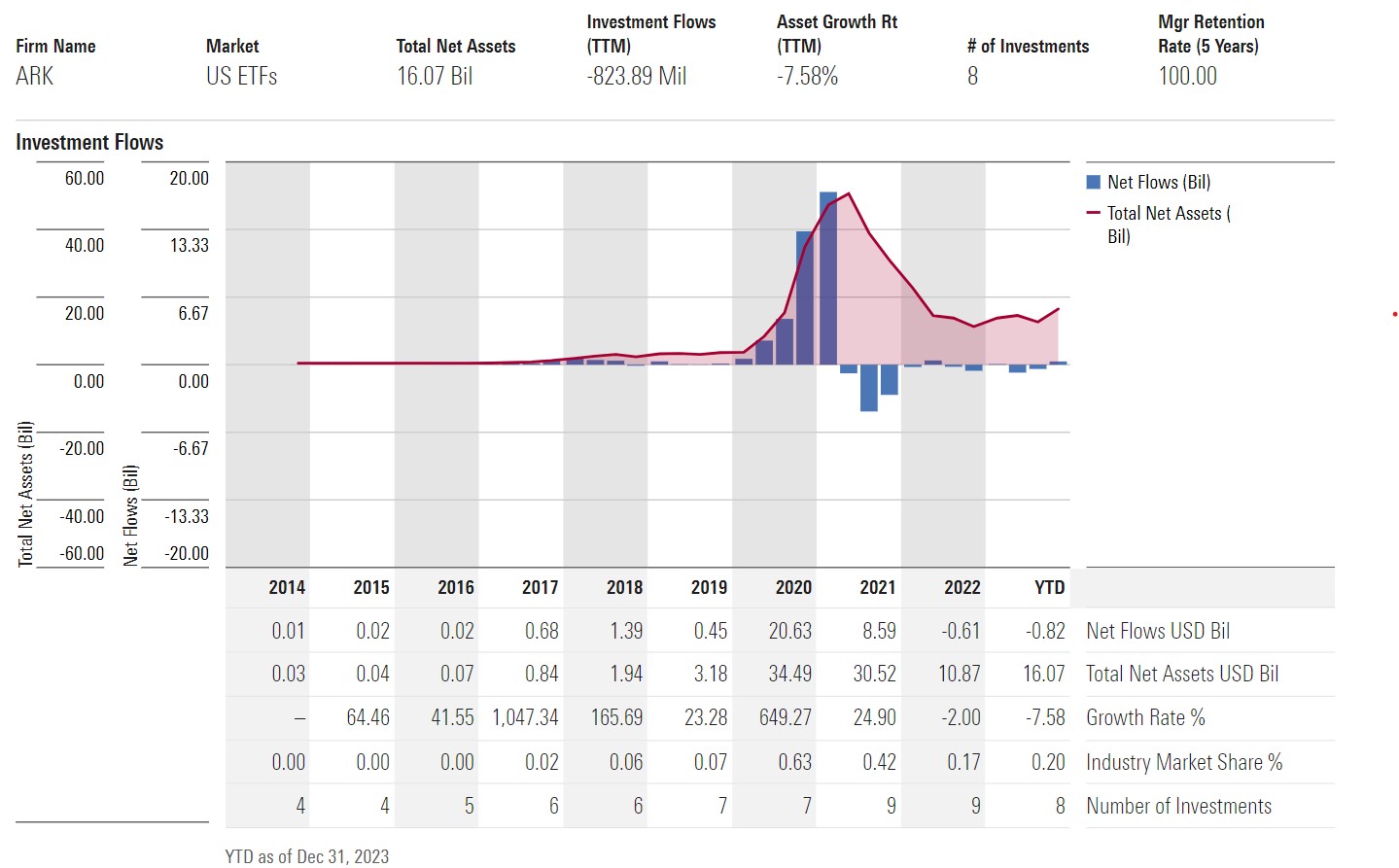
    Case in point, the Ark Innovation Fund (ARKK). I wrote about this (Recency Bias) on how statistically unlikely it is for this fund or any other such fund to continue to perform the way it did, not because I somehow knew what was to come but because history proves over and over again that hot streaks, not rooted in fundamentals, are bound to end.

    It ended for ARKK as well. That was expected for a fund designed to shoot the lights out.

    But if you had an investment thesis going into the fund and if that thesis still holds, you should rejoice at such price declines because you get to buy the investment at a discount.

    But what are the investors in the fund doing? Precisely the opposite. They piled into it at the peak, but many seem to be running for the hills ever since.

    Source: Morningstar, Data as of December 31, 2023

    Any wonder then that there exists a persistent gap between what an investment earns versus what a typical investor investing in that same investment earns. Morningstar pegs that behavior gap at 1.7 percent annualized return that investors sacrifice by dashing in and out of investments at precisely the wrong time. That might not sound like much but try compounding that over say a 50-year a typical investor’s timeframe and we are talking real money.

    And that gap persists because we do not think much about what we are buying and why we are buying it. We do not think how an investment fits into our plan. Or does it even belong in our plan?

    And hence when the bad times come which they eventually do for all investments, we bail.

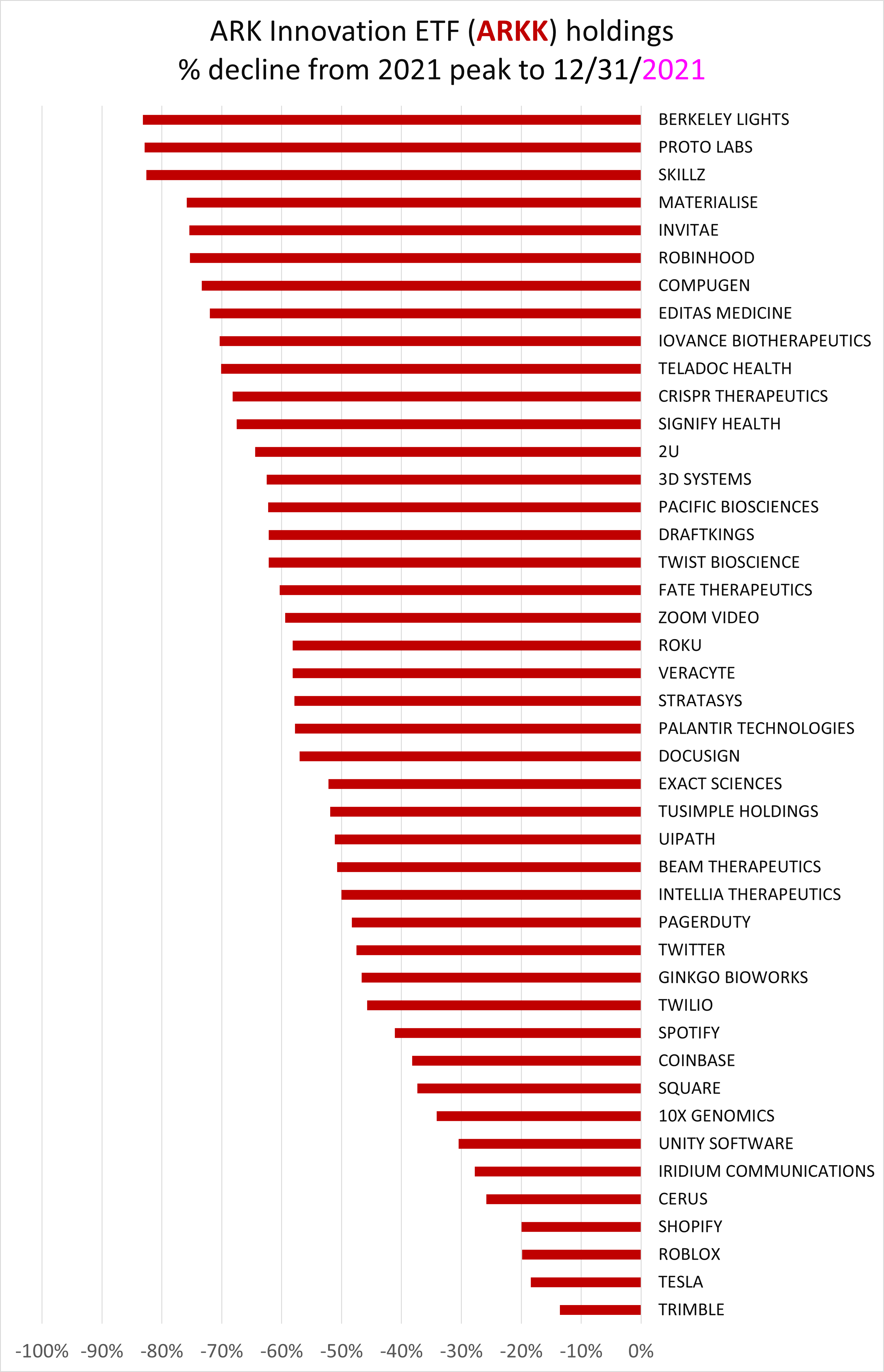
    Personally, these kinds of fly-by-night investments (ARKK) don’t fancy me much because I don’t consider them as investments. But the absolute carnage in the prices of the fund’s holdings the last time I crunched the numbers is a sight to behold.

    I checked the fund’s holdings again a mere two years later and it holds a completely different set of investments. That is not investing. That is Vegas-style speculating.

    I would not want anyone speculating with my money and neither should you.

    Cover image credit – Lilartsy, Pexels

  • Permission To Spend

    Permission To Spend

    Retirement is expensive. It is expensive because the longer we live, the more years we’ll spend in retirement than saving for it. The other way to put it is that we are likely to have spent more years retired than working.

    The task, hence, is big. Not to mention the fact that there are other discretionary goals to plan for in the interim like paying for college, buying a home etc. I call them discretionary because there are a few ways to pay for them but none for retirement. We must save and invest our way out of it. And the sooner we start, the easier that task gets.

    But that’s when mistakes get expensive. We all make money mistakes because that is how we learn. But avoiding them, especially when early in our careers, could deduct years from our time to financial independence. Because mistakes are compound interest in reverse.

    But assuming you have the investing part figured out, how do you know if you are saving enough towards retirement? A rough outline on how to find that out…

    You start with an estimate of your first year’s expense in retirement and assume you are buying a growing annuity at the time that accounts for inflation and a planned life expectancy of say 100 years. You then bring the value of that growing annuity that you’d buy when you first retire to the present using a reasonable discount rate (rate of return you expect to earn when working). You then subtract from it the money you have already saved. That difference is your savings goal. You have now till you retire to meet that savings goal.

    But once you are meeting that goal, you can then grant yourself permission to spend. You can spend on college, never a guilt there. You can splurge on vacations. You can buy nicer cars and nicer homes. You can spend on anything you desire…and all guilt-free.

    Because you already took care of the biggest expense you’ll likely ever face.

    Thank you for your time.

    Cover image credit – Markus Spiske, Pexels

  • Real Investing

    Real Investing

    Alice Schroeder in her book, The Snowball describes how Warren Buffett acquired shares in the Coca-Cola company. Buffett had been wanting to buy Coca-Cola shares for quite some time but couldn’t because they never got cheap enough for his taste. The 1987 stock market crash gave him that chance.

    The world, though, knew who Buffett was so if the news of him buying Coca-Cola shares leaked out, the stock price would jump and he’ll be sad.

    Plus, he wasn’t the only one buying. The Coca-Cola company itself was buying back its shares as it was such a great deal. A company buying back its shares and retiring them is an indirect form of dividend payment to the shareholders that remain. It increases the ownership stake in the company for the existing shareholders which then gets reflected in a higher share price.

    So Buffett was buying shares and so was Coca-Cola. And they kept buying in as hush-hush a manner as possible for months.

    Buffett, through Berkshire, now owns 10% of the Coca-Cola company. Berkshire receives $750 million in dividends from Coca-Cola each year. That’s the total amount he paid for the shares. That’s getting the original investment back in cash dividends each year, literally forever.

    Buying some of the world’s best businesses as a forever hold while letting them do their thing is how you win. Where is the money for you then? The money is in the direct (cash) and indirect (share buybacks) dividends that ultimately flow to you as a shareholder. Dividends are an outcome of profits and businesses are in the business of making profits.

    And you are not in this game to exchange pieces of paper with each other. You are in this game to own great businesses for the long-term and partaking in the profits these businesses deliver in the form of dividends.

    And you’d want to pay as little as possible for those profits. I mean if you are getting to buy a business at 20 times their annual profits, would you be happy if the price of that business doubles while profits remain the same? No you won’t be because any new money you invest in buying shares of that business, you are paying double the price for the same dollar of profits. No sane business owner would want that.

    So imagine getting excited with rising stock prices. Because unless you are done investing forever, that’s the last thing you’d want.

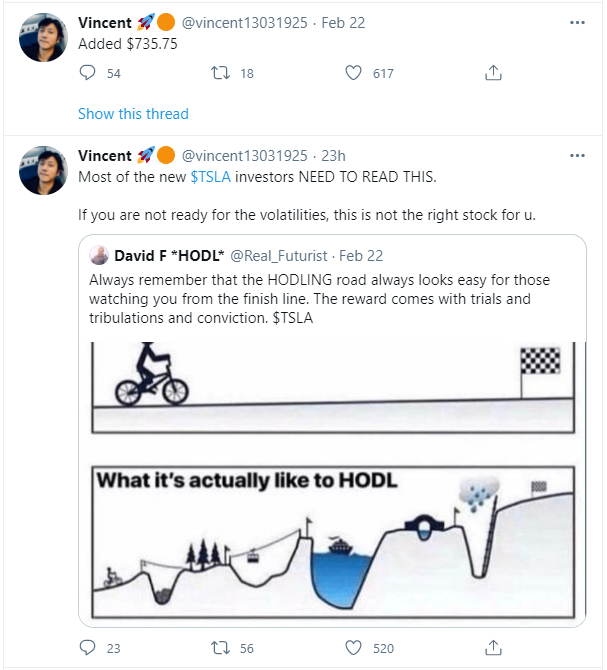
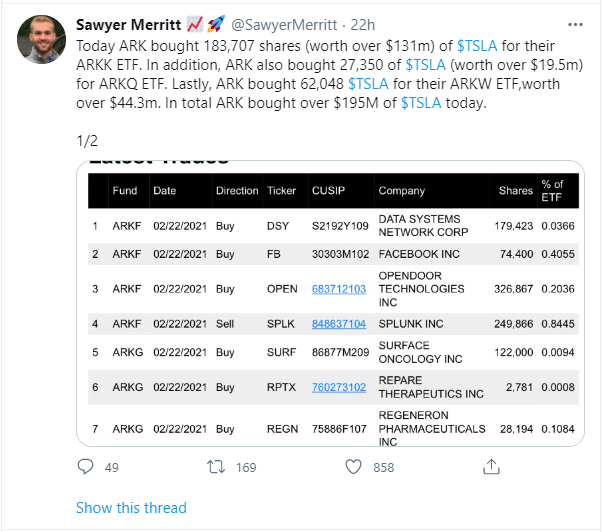
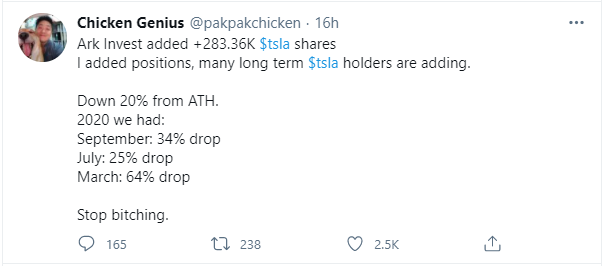
    What then explains this cultish behavior we sometimes see around us, highlighted in the tweets below? I mean why would you want to tell the world about a business you own that it is such a great deal? That is not investing. That is implying a Ponzi-type setup where the poster wants to profit off of short-term price changes on someone else’s dime.

    Ownership-oriented investors don’t care what a big institution has to say or does…

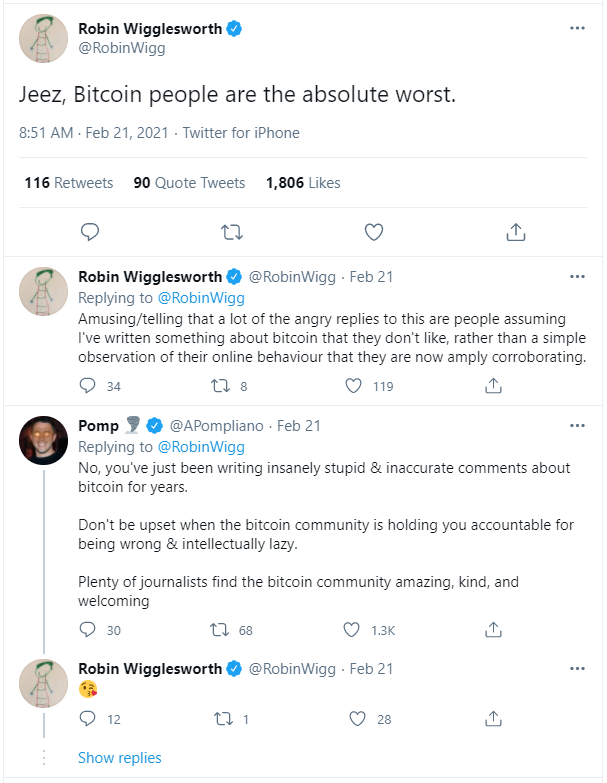
    And if you thought that was cultish, the crypto world is another level cultish.

    Bitcoin has a price but it has no value. The whole of crypto has no value. It is a heist. But if I thought bitcoin was so great, I wouldn’t be telling the world about it.

    Real investing is not trading in and out of investments. Real investing is not investing in fads, cults and literal Ponzi schemes (crypto).

    And real investing is definitely not whatever this is…

    Real investing is about long-term business ownership. Real investing is about profits and dividends. Anything less is a waste of your time, your money and your life.

    Thank you for your time.

    Cover image credit – Anete Lusina, Pexels

  • Decoding Social Security

    Decoding Social Security

    We all pay into the Social Security system through FICA taxes each year. FICA is short for the Federal Insurance Contributions Act that also includes paying for Medicare, but we’ll leave that discussion to later.

    The Social Security system, as designed, is set up as a transfer payment from the folks who are currently working paying for folks who are retired. So, unlike say saving into a 401(k), there is no designated account in your name. The expected monthly benefits are based upon the average of your thirty-five highest earning years, indexed to inflation.

    Indexed to inflation means that the income you were making 35 years ago is brought to the present to account for inflation.

    Social Security can be thought of as one of the best government-guaranteed annuities you’ll likely ever own that will pay you inflation-indexed income for the rest of your life. It is like a pension with big implications on how you invest the rest of your money.

    But back to how Social Security gets calculated, if you work 40 years, the lowest five income years fall away from the calculation. So, you don’t want a bunch of zeros for any of the years that count.

    And when you check your benefits statement which everyone should at the Social Security website, the projected benefits assume that you continue earning at your current rate until retirement.

    You become eligible to receive Social Security if you paid into the system for a minimum of ten years. How much you’ll eventually receive though will depend upon the top 35 income years and when you first claim benefits.

    On that note, there are three main ages where you get to decide on receiving benefits you are owed:

    • Age 67 – Social Security defines this as the full retirement age. You’ll receive 100% of the promised benefits when you claim them at 67.
    • Age 62 – This is the earliest you can claim benefits. But if full retirement age is sixty-seven and you claim benefits five years early at age 62, your benefits get curtailed by 30%. And that remains true for the rest of your life. This might be the right call if you need the money or if you are ill and do not expect to live long but if that does not apply to you and you can wait till the age of 67, you should.
    • Age 70 – But the big payoff for folks who are healthy enough (and wealthy enough) to wait is to claim benefits starting at age 70. Because every year you postpone collecting benefits beyond your full retirement age, you earn an extra 8% each year. So, if you wait till age 70, that is 24% more in benefits on top of the 100% you would have received at your full retirement age of sixty-seven. And the difference between the reduced benefits at age 62 versus the maximum benefits at age 70 means a 76% increase in your monthly benefits for the rest of your life. There is nothing out there that is as guaranteed as this for deferring receiving benefits over say an eight-year timeframe.

    But there are more nuances. Like if you collect benefits before full retirement age and you have earned income (not dividend or interest income) that exceeds $22,000, your Social Security payments get temporarily withheld.

    But once you reach full retirement age, the money that was withheld comes back to you in the form of a larger monthly check moving forward.

    So, if you continue to work, it is best not to claim early. Wait till your full retirement age when those earnings restrictions go away. There is no penalty if you decide to continue to work once you reach full retirement age.

    The overall system as built though, is actuarially fair. That is, whether you collect a smaller check at age 62 or a much bigger check at age 70, it is designed to make you whole as long as you live to the average life expectancy.

    But the longer you live, the better off you’ll be in delaying collecting benefits up until age 70. Beyond that, there is no benefit to waiting. And not everyone should wait till the age of 70 but at least one spouse in a marriage should.

    And not to be overly sexist but that spouse likely would be the higher earning male who is also actuarially likely to die earlier.

    The higher earning husband then can wait till age 70 but the wife can collect her benefits early, even before full retirement age assuming she is not working. Or wait till full retirement age if she is. So, they’ll be receiving two Social Security checks while both are alive beyond the age of 70.

    But if the husband dies first, the wife can then step up to her survivor benefits worth a 100% of what her late husband was receiving. Her smaller benefit check then goes away. This hence is a great way for married couples to potentially hedge their bets. It doesn’t always work out that way but is generally a good strategy to maximize benefits over their combined lifetimes.

    And when we talk about breakeven ages, we want to know the number of years it takes for each decision to be equal to the other. So, for a single person, the difference between claiming benefits at age 62 versus at full retirement age, that person has to live till age 78 to make it worth it. But that is still lower than the average life expectancy of 85 years.

    And between receiving benefits at age 62 versus at age 70, that person has to live till age 83 to breakeven. That again is still lower than the average life expectancy.

    But here is the big deal for married couples because now we are spreading that breakeven age over two lifetimes which means that if done right, it is highly likely that the surviving spouse collects the much higher survivor benefits for life.

    But what if you get injured or get terminally ill before retirement? Does that mean you get nothing? No, it is then likely that you’ll be eligible for Social Security disability insurance if you are unable to work even before age 62.

    Social Security disability benefits are approved on a case-by-case basis and the process can a take long time. But once you are approved, you’ll receive the benefits, backdated to the time you got injured.

    And if you have a spouse or children, they’ll be eligible for disability benefits as well.

    So Social Security in a way, acts as a disability insurance, it is a pension plan and then it is a form of life insurance for the spouse or minor children left behind.

    Here is one example of many on how one could plan with the goal being to maximize the benefit for life. This is not cheating the system. As stated before, the system is designed to make you actuarially whole. You just want to make sure you don’t miss out on the benefits owed to you.

    So, husband and wife, husband made more during his working life. Wife worked but not for a whole lot of years. So, if he dies and if the surviving wife is not working and is age 62, she can start with her smaller benefit first.

    But once she gets to full retirement age of 67, she can switch to the much higher benefit worth a 100% of what her late husband was entitled to. And that larger amount continues for the rest of her life.

    Now let us turn that around. Maybe the husband is a business executive, working and making a bunch of money but say he lost his wife to breast cancer. He is then entitled to survivor benefits, but those benefits are likely smaller than his eventual benefits. What he can do then is to collect his survivor benefits even when continuing to work while his own benefits continue to grow by 8% a year until he turns seventy.

    That 8% a year growth though, only applies to the worker’s own retirement benefits and not the survivor benefits so when he gets to age 70, he can now switch to his larger benefit which will continue for the rest of his life. The survivor benefits from his wife then falls away.

    I know this all sounds confusing and confusing it is. And we still have not talked about taxes on income from Social Security which we’ll do in a later writeup but feel free to reach out if you are about to decide on what is best for you and your spouse.

    Thank you for your time.

    Cover image credit – George Becker, Pexels

  • The Right Process & A Good-Enough Plan

    The Right Process & A Good-Enough Plan

    Albert Einstein is a universal symbol of genius. He discovered the theory of relativity, won a Nobel Prize in physics, and made scientific advances in gravity, cosmology, radiation, theoretical physics, statistical mechanics, and quantum theory. So, wouldn’t an investor be blessed to have the smarts like his?

    Einstein lost his life savings – including his Nobel Prize money – on bonds that defaulted in the crash of 1929.

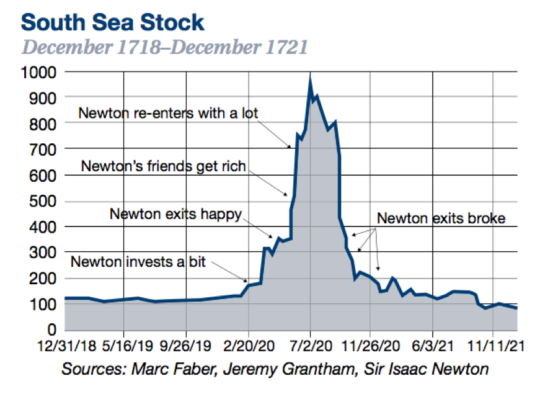
    Sir Isaac Newton, one of the greatest mathematicians this world has ever known, was in fact a savvy investor. But even he couldn’t avoid falling victim to FOMO (fear of missing out). He lost the bulk of his wealth speculating in shares of the South Sea company.

    But Einstein and Newton likely had better things to think about than money but not the folks running Long Term Capital Management (LTCM), a hedge fund built to manage other people’s money. LTCM was launched in 1994 by a team that included Nobel Prize winning economists and renowned Wall Steet traders. The fund was designed to profit from inefficiencies in global bond prices. The investment team behind the fund was supremely confident that they had eliminated all risks from their process.

    And once you’ve eliminated all risks, why not lever up and bet big? So bet big they did, borrowing twenty-five times the fund’s value and accumulating positions to the tune of one and a quarter trillion dollars.

    But of course, they hadn’t eliminated all the risks. So when Russia defaulted on its debt in the summer of 1998, it led to a series of cascading events that ended with the fund becoming insolvent. LTCM shareholders who made money hand over fist in the preceding years, lost it all in a matter of months. To contain the after-effects of that debacle, the then Federal Reserve chairman Alan Greenspan had to orchestrate a bailout to unwind that setup. Investors in the fund though lost everything.

    Then we have Mensa and their investment club. Mensa is a society that welcomes people from all walks of life, provided their IQ is in the top two percent of the population.

    But these folks could stand to benefit by picking up a copy of Investing for Dummies. Finance writer Eleanor Laise analyzed the performance of the Mensa Investment Club between the years of 1986 and 2001, a 15-year stretch when the stock market averaged 15.3% a year.

    The Mensa Investment Club on the other hand eked out a measly 2.5% annually. That isn’t just lagging performance. That is like getting left behind at the station.

    Two things stand out from all these stories…

    • Some of the smartest people in the world can make for being terrible at investing.
    • Holding on to wealth is hard.

    Getting money and keeping money are two different skills. Getting money requires taking risks, being optimistic, and putting yourself out there.

    But keeping money requires the opposite of taking risks. It requires humility, and fear that what you’ve made can be taken away from you just as fast. It requires frugality and an acceptance that at least some of what you’ve made is attributable to luck, so past success can’t be relied upon to repeat indefinitely.

    Morgan Housel, Collab Fund

    And many think the investment process works something like this…

    1. You make an educated guess about the economy.
    2. You use that to build a hunch around what the stock and bond markets are going to do.
    3. You then pick investments based on that hunch.
    4. When things don’t pan out as expected, you look for a new theory and change your investment strategy.
    5. You rinse and repeat and then you are suddenly sixty.

    On that note, the Wall Street Journal polls fifty-five of the nation’s top economists twice each year to gauge what lies ahead for the economy, interest rates and the dollar. Most get their forecasts wrong.

    Pity the poor Wall Street economist. Big staffs, sophisticated models, reams of historical data, degrees from Ivy League schools and still they forecast about as well as groundhogs.

    Jesse Eisinger, Wall Street columnist

    And it is not their fault. Forecasting anything to do with a complex, adaptive system that is our global economy is hard.

    I am not a fan of watching mainstream financial media. I seldom do. But we have all seen experts that come on these shows and recommend investments as if that is all it takes.

    Because they don’t know you. They don’t know about you. It is a great deal for them when you watch these shows but a very, very bad deal for you if you act upon the mostly non-contextual advice being dispensed.

    The solution then is to design a good process, a process built with you and your lifecycle in mind, a process that is going to reliably take you to your goals and beyond.

    And a process built around contextual nudges along the way just like how a captain steers his ship towards its destination.

    Getting the process right is crucial. A bad process with a temporarily great outcome is when you get LTCM-type situations. Never invest in anything when you know deep down that there is something off with the process.

    And never stop investing when you know that the process is right, but the outcome is temporarily dull. In fact, it is a great deal for you if you are an aggressive saver.

    But once the process is figured out, letting the investment returns fall where they may within a rough probabilistic band while applying tax-optimal tweaks along the way is how you get to your goals.

    Behavioral finance says that emotions play a big role when holding on to investments, especially of the paper kind that we own in our 401(k)s and brokerage accounts. Because it’s easy to hold on to houses. They are illiquid. We don’t see their price move up and down by the minute. We can touch and feel them.

    But holding on to financial assets requires conviction. And conviction does not come easy. It takes years of concerted effort and yet you are never done. It is a forever endeavor.

    But building conviction in the process that feeds a good-enough plan while affording a great life is how we win. That is how we all win.

    Thank you for your time.

    Cover image credit – Yaroslav Shuraev, Pexels

  • Reinvesting Dividends Sets You Free

    Reinvesting Dividends Sets You Free

    Tim Urban in one of his posts, The AI Revolution: The Road to Superintelligence, attempts to measure the accelerating rate of human progress through something called the Death Progress Units (DPU). Take George Washington for example, our first president and likely a very curious dude from the mid-eighteenth century and say we transport him to today.

    But imagine his times. There was no electricity. There was no running water. Transportation was a horse. Long distance communication meant that either you’d use smoke signals, fire a cannonball, or send a letter through a horse carrier.

    But today, he sees metal cans whizzing by on freeways at speeds incomprehensible to him during his times. You show him the airplane. That he could be anywhere in the world in less than a day. You tell him about the International Space Station. You show him the internet. The iPhone. That you can make video calls and talk to anyone, anywhere across the globe. You play him music that was recorded 50 years ago. Flabbergasted would be the least of what you would expect him to be. He would die of shock seeing all this progress.

    Now take Leonardo da Vinci who lived in the 1500s and say we transport him to George Washington’s times in the 1750s. What does he see? Just like in his times, there is no electricity. There is no running water. People still commute by horse. And the same set of communication devices exist. Some improvements here and there but not much change.

    And certainly not at a scale that would kill him of shock. One would have to go back 1000s of years to see a big difference.

    So how far into the future one must go to literally die of shock watching the scale of progress. That is what Tim Urban means by DPUs.

    And 250 years in the grand scheme of things is nothing. It is a recent, recent history like yesterday. Yet, look at the world today compared to the world just a few centuries ago. The difference is night and day.

    And DPUs are getting shorter and shorter…so short that we could witness that level of progress in one lifetime like what could take George Washington 250 years to witness.

    This pattern—human progress moving quicker and quicker as time goes on—is what futurist Ray Kurzweil calls human history’s Law of Accelerating Returns. This happens because more advanced societies have the ability to progress at a faster rate than less advanced societies—because they’re more advanced. 19th century humanity knew more and had better technology than 15th century humanity, so it’s no surprise that humanity made far more advances in the 19th century than in the 15th century—15th century humanity was no match for 19th century humanity.

    Tim Urban

    So, progress is happening at a faster and faster rate due to the compounding nature of knowledge.

    The computing revolution is another example where we observe compound growth in real-time. We started off with vacuum tubes and look at where we are today. This ad for Apple products from the bad old days of 1995 is exhibit A signifying the scale of progress. And this was the cutting edge then.

    Do not miss out on the $6,400 in 1995 dollars for a laptop with 32MB of RAM – less than a thousandth of what we’ll find in the cheapest of phones today.

    And assuming customers flocked to the stores to buy these products meant that Apple as a company made profits. And say that was a 100 million dollars in 1995.

    Apple was a public company then, so those profits belonged to the shareholders. Apple had some decisions to make with that money…

    1. Distribute 100% of it back to the shareholders in the form of dividends.
    2. Distribute some as dividends and use what remains for reinvesting in research and product development.
    3. Retain all profits with none going to the shareholders…for now.

    Clearly option 1 would have been a disaster for the company as well as for the shareholders as none of the profits would have been used to build the next set of products that made Apple what it is today.

    And of course, a disaster for their customers as well. Imagine life without a smartphone 🙂 .

    Option 2 would have depended on what rate of return the company could generate by reinvesting the profits back into their business. And the fact that the company didn’t start issuing dividends until recently proves that Apple’s management had better use for the money. Option 3 hence is what they chose.

    And that clearly proved to be the right call as we all got to see. At least in theory, it was the right call, not discounting the fact that they almost went bankrupt until Steve Jobs orchestrated the kind of turnaround that’ll probably be the recorded best in business history.

    But that is the nature of the game. No business embarks on a project with the intent of losing money. They will make mistakes but a collection of businesses, in aggregate, must and will make profits or progress stops.

    And option 3 is the preferred route for many businesses in the growth stage of their lifecycle as they need continuous influx of capital to build and grow.

    But as a business starts to mature with more profits coming in than it finding ways to profitably deploy, they start to return some of those profits back to the shareholders in the form of dividends and/or stock buybacks (indirect form of dividends).

    So, of the total return you get investing in stocks over the long run, part of it comes from dividends and the remaining comes from appreciation through reinvestment of profits back into the business. But eventually, all the accumulated profits will be paid out as dividends.

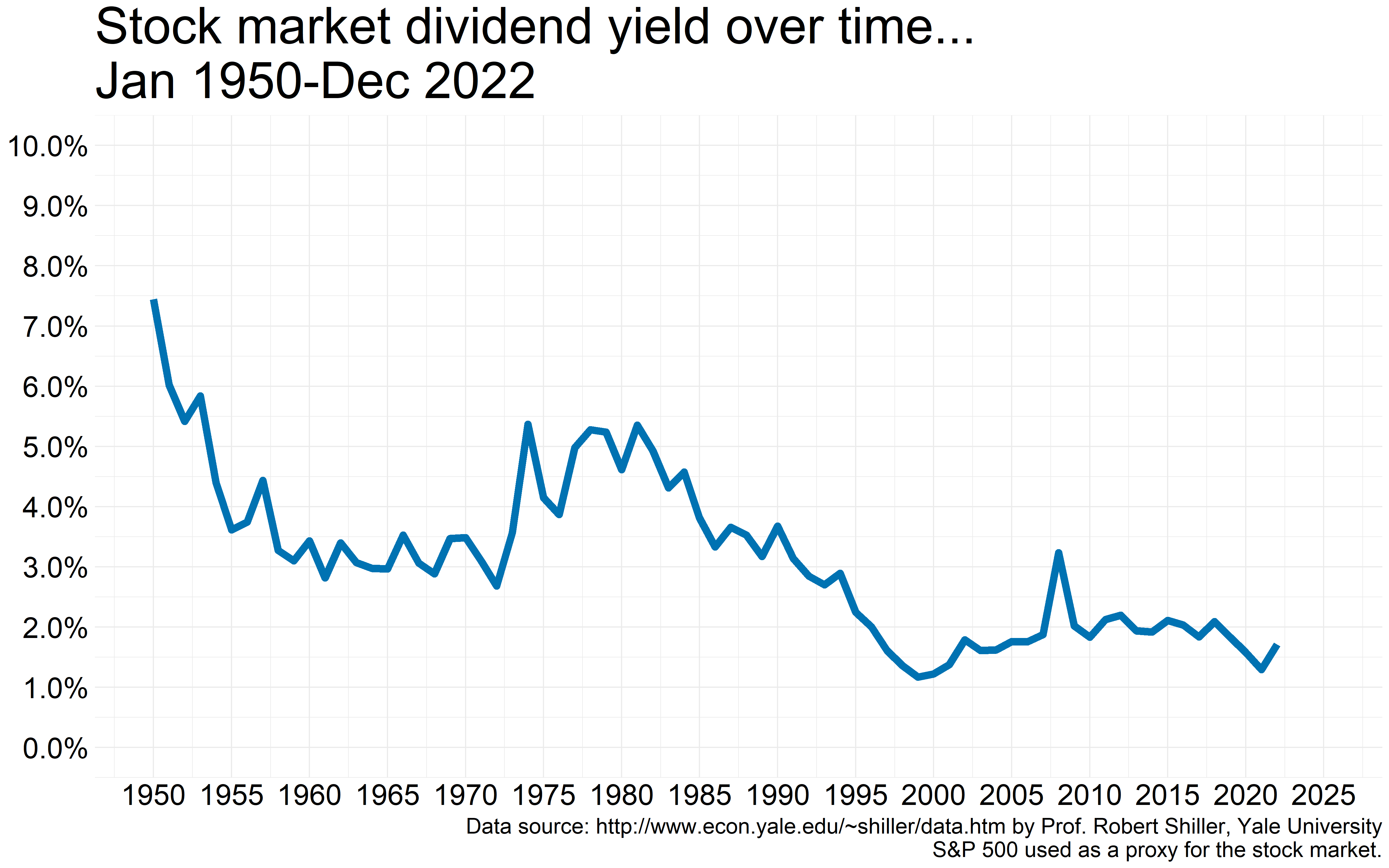
    This below is the historical dividend yield for US large company stocks as represented by the S&P 500 index, a convenient proxy for stocks. Convenient because reliable historical data is available for S&P 500 but not so for the other corners of the market.

    Dividend yields were higher during the 1950s because investors were still recovering from the trauma of the Great Depression followed by the Second World War. Nobody wanted to own stocks. To entice investors, businesses paid out almost all their profits as cash dividends. Stocks acted like bonds with profit growth muted due to limited reinvestment. That fortunately changed and here we are today.

    But say you were transported back to 1950 (I love time travel) with the economy about to transform from catering to wartime industries into meeting domestic consumer demand of the post-war economy.

    And say you as a baby happen to come into $100 through gifts that your mom then took and invested in the stock market. That money was then left to compound till today.

    And say along the way, you had a choice to make; take the dividends out and spend them or reinvest them each year back into the same portfolio of businesses.

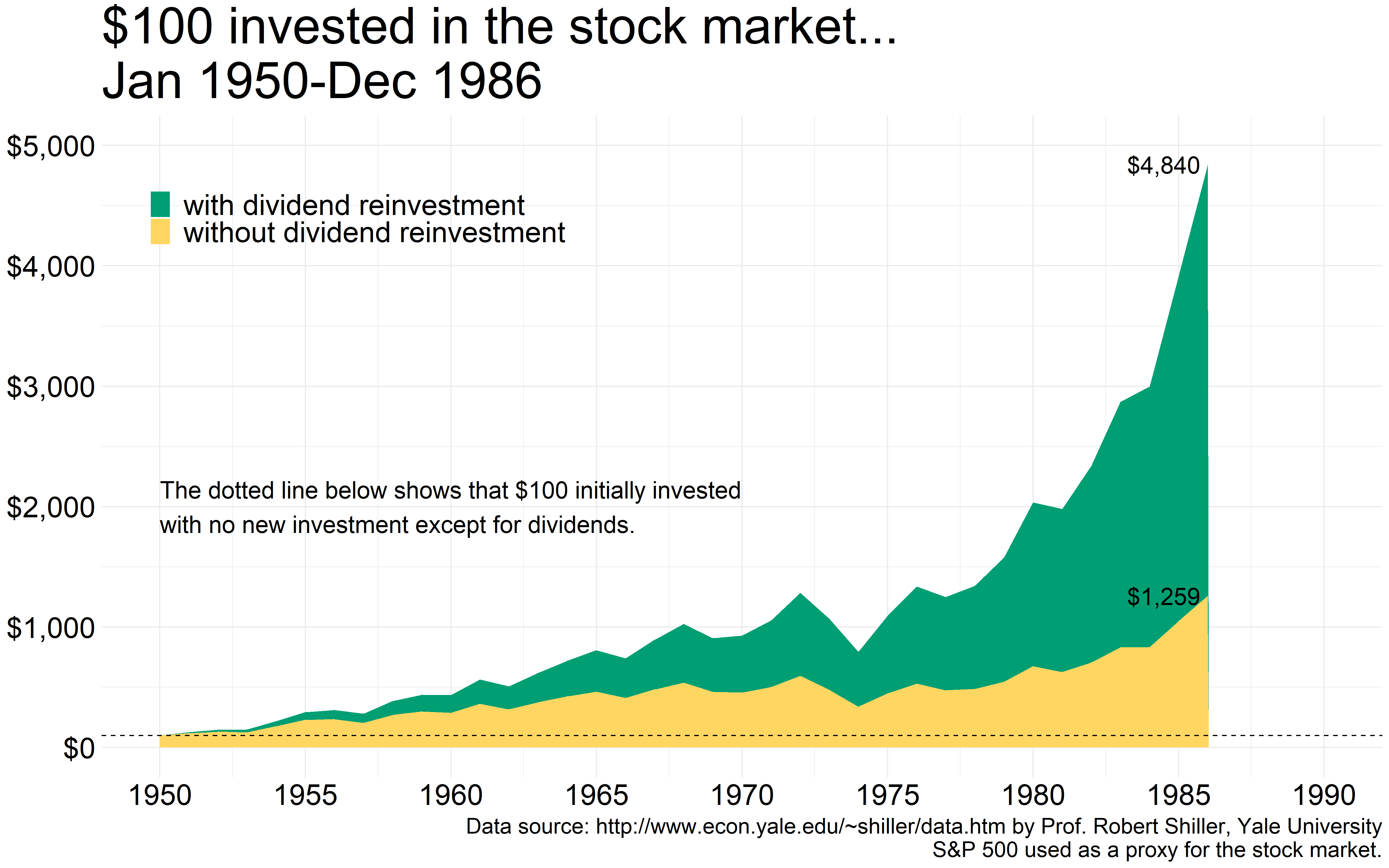
    To highlight the compounding nature of this process, we will first look at the first half (1950 to 1986) of the 72-year timeframe.

    The first half first…

    The difference between dividends being reinvested vs. not reinvested is starting to diverge but does not look like it is as big a deal.

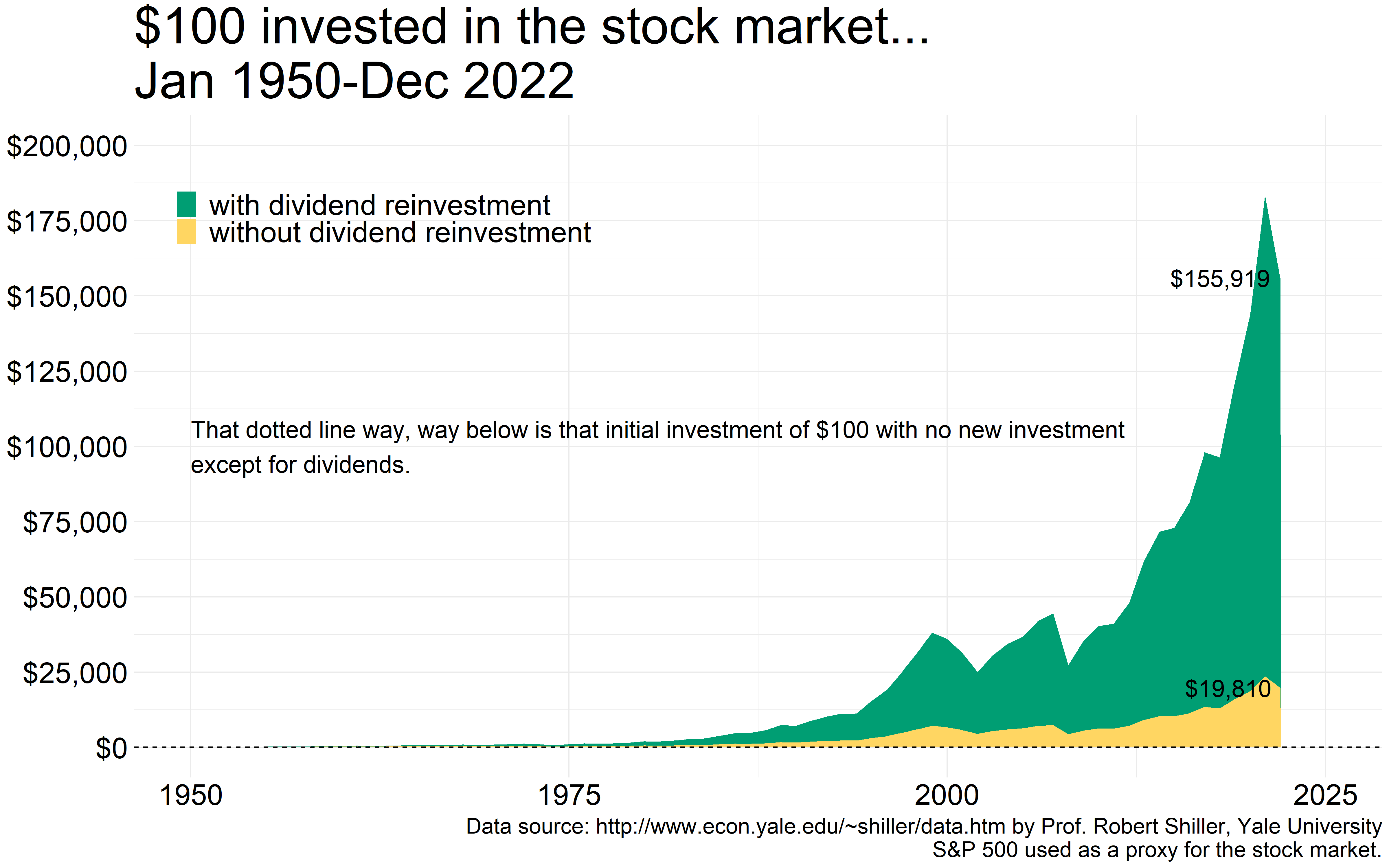
    And then the law of compounding returns kicks in.

    But you say $100 was big money back then for any family to save up. But then a pack of cigarettes cost 25c back in time. That is about 100 dollars’ worth of cigarettes each year if you smoked a pack a day. And many did. So, a manageable sum for any family.

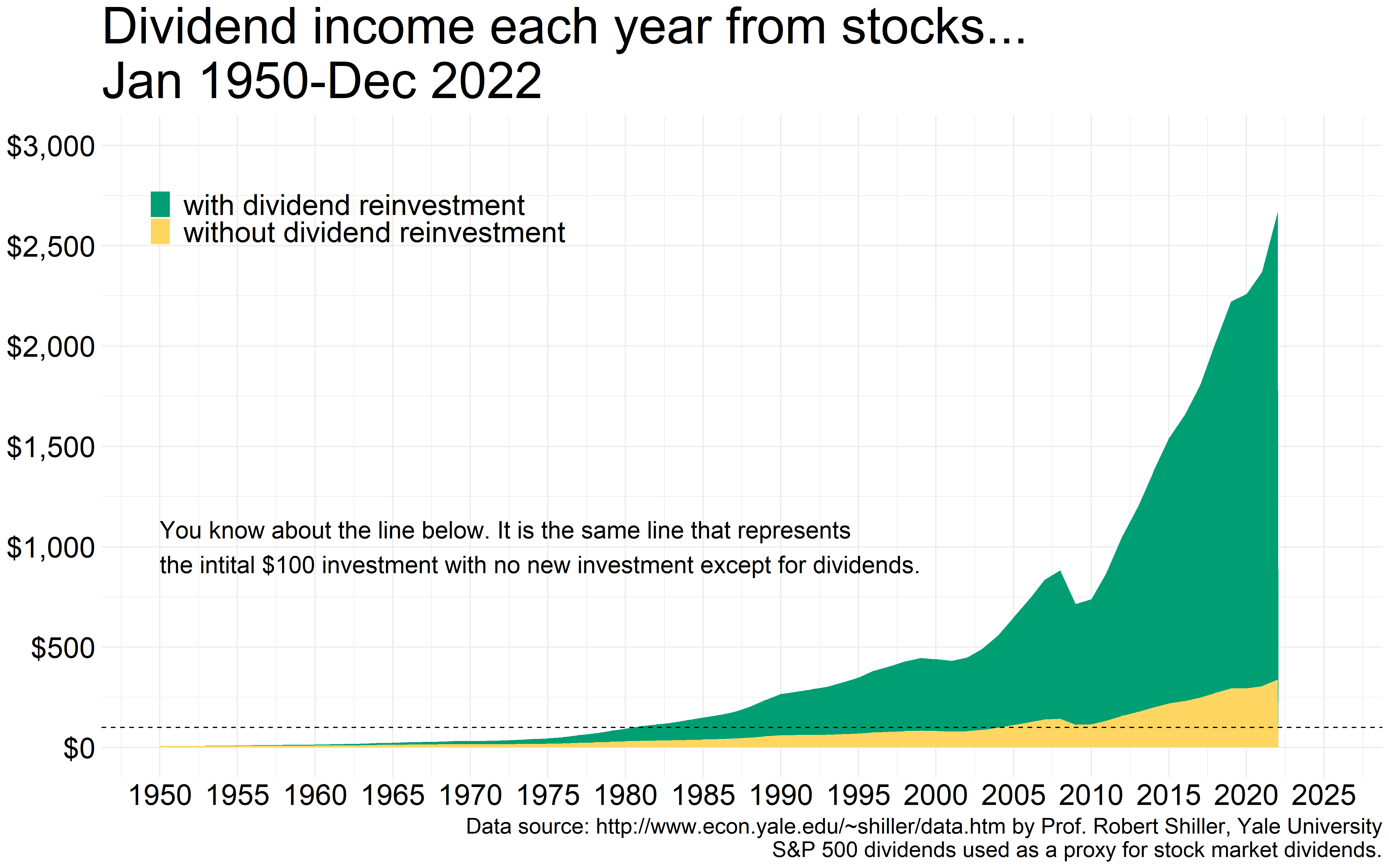
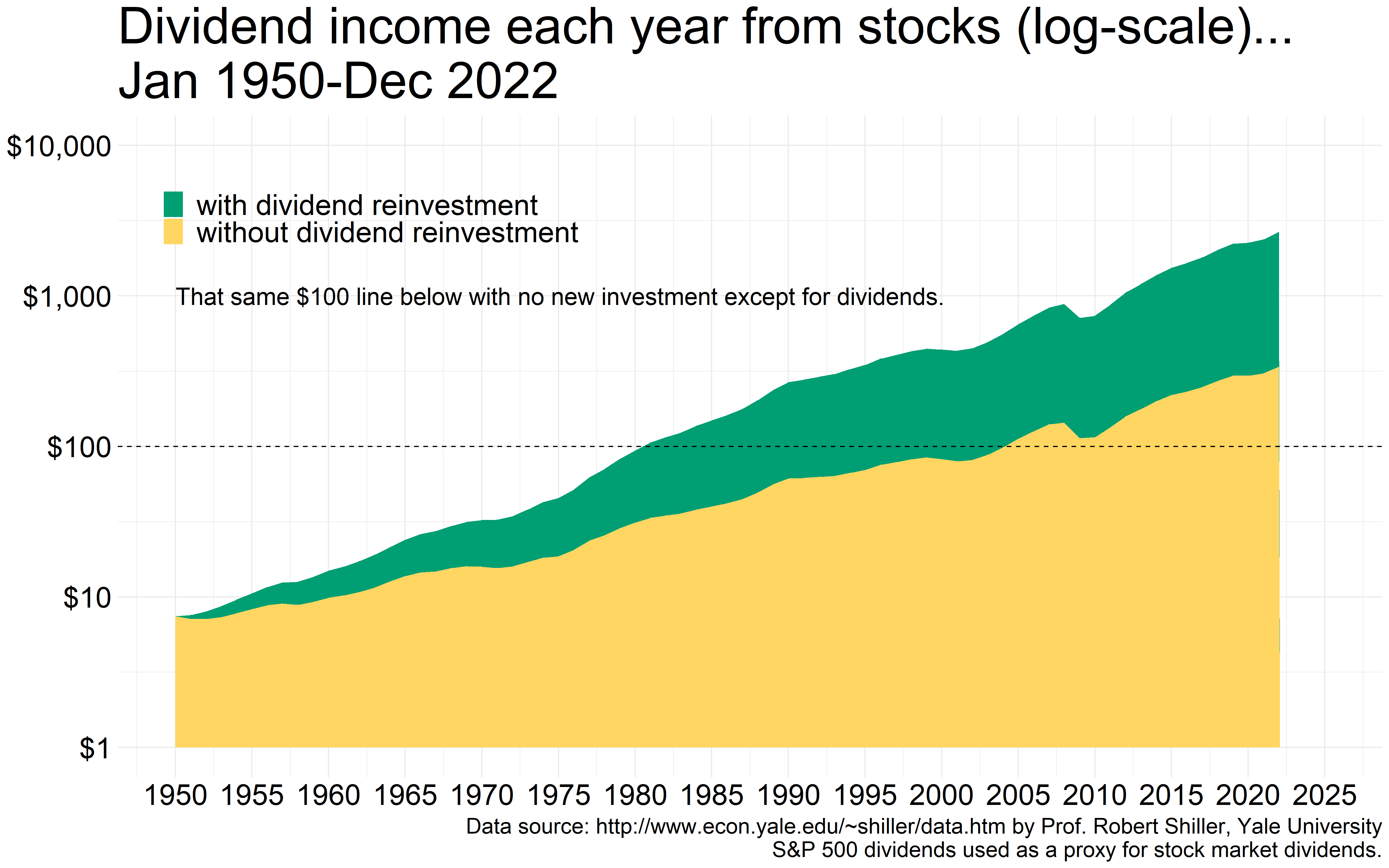
    And more importantly, how long did it take for that portfolio to throw off in dividends equivalent to the amount that was originally invested? Because that is what you are after. That is what will set you free.

    Zooming into that $100 dotted line using log scale…

    With dividend reinvestment, you got to the proverbial freedom in 30 years. Without that, you’d pretty much wait the entire timeframe.

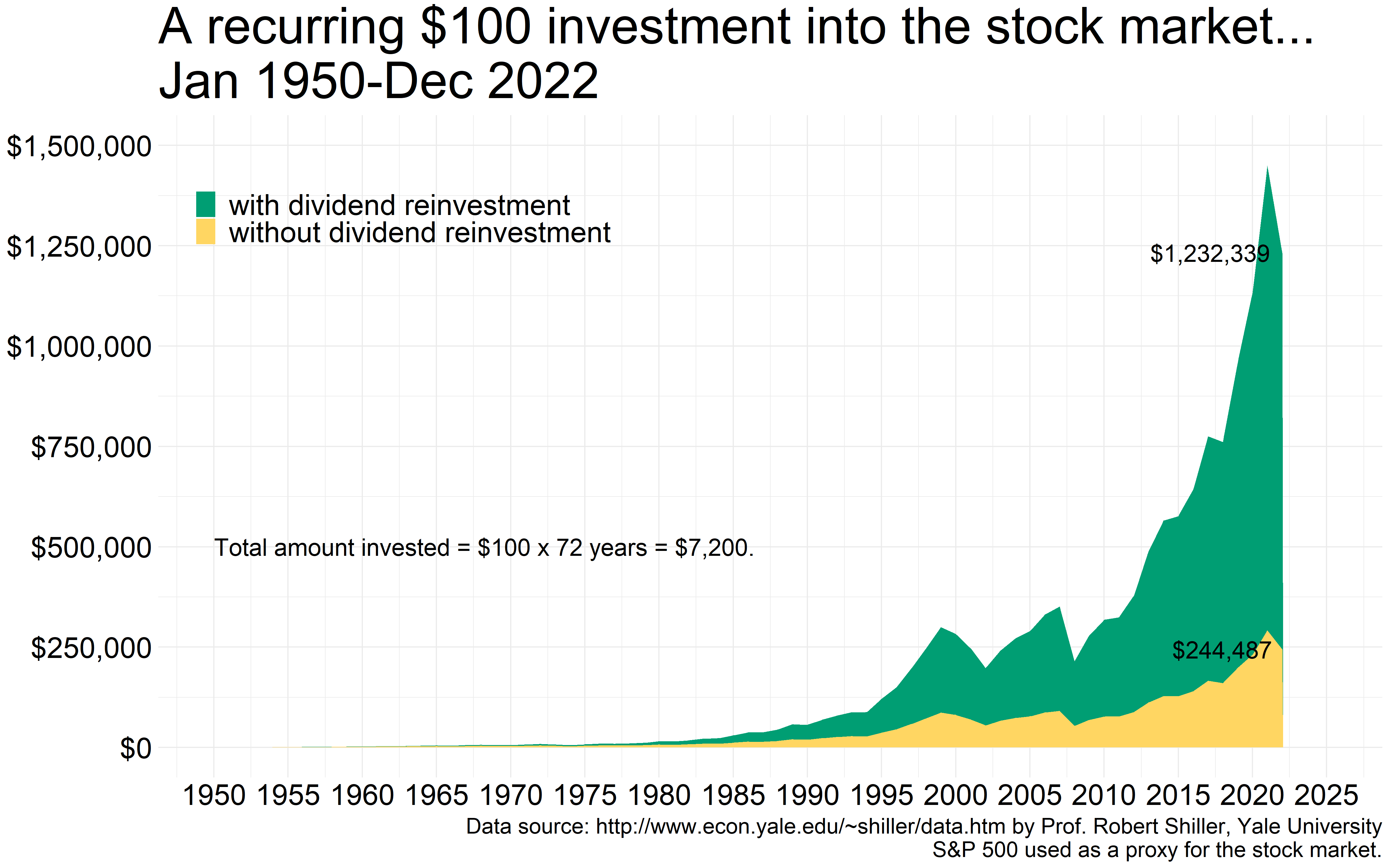
    But why would anyone just invest once and call it a day? You’ll want to do it over and over again because that is what you are supposed to do.

    So, take that same family and instead of investing just a single $100 at the start of the period, say they invest that sum every year through the entire timeframe.

    And this is their final tally…

    This is compounding returns at its best. The first half of the timeframe is hardly exciting, but the second half is equivalent to the DPU scale of progress of your savings.

    A word of caution: now don’t go realigning your investments with dividends as the sole focus. Because you will likely end up with businesses that don’t have much juice left. You want natural dividends that are an outcome of the capital allocation decisions a diversified set of businesses make. You don’t want the businesses you own to go out of their way to make dividends available to you regardless of their ultimate cost. Because that will be like artificially curtailing progress and that will never be a good thing.

    Thank you for your time.

    Cover image credit – Julia Kuzenkov, Pexels